
In brief
At the eve of the Nov. 3 midterm election, President Donald Trump reopened the Lincoln Memorial Reflecting Pool, citing lower repair costs and a triumphant military stance. He vowed $5,000 to every adult if Republicans win, criticized Democratic candidates, and announced a new military complex near Arlington. The event highlights the intersection of national monuments, electoral messaging, and public entitlement promises.
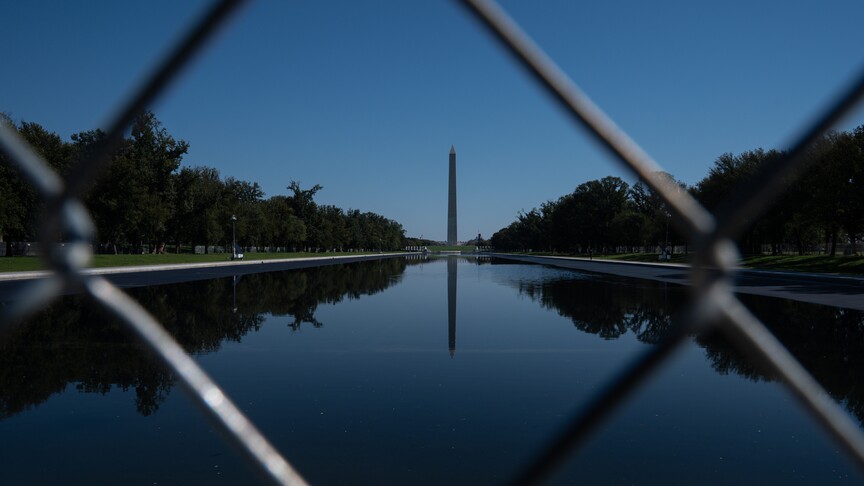
On Monday, President Donald Trump turned the spotlight on the Lincoln Memorial Reflecting Pool in Washington, D.C., by officially reopening the water body that had been closed for repairs since early 2024. The ceremony, held on the eve of the Nov. 3 midterm elections, was more than a restoration milestone; it was a platform for Trump to highlight his presidency’s achievements and to push a voter‑centric pledge aimed at the American electorate.
The pool, originally constructed between 1920 and 1923, had suffered from leaks, algae growth, and vandalism. According to Anadolu Agency, Trump’s administration replaced the leaking pipes and resurfaced the pool at a cost that was markedly lower than what had been projected during the initial inspection. The oversight of the work was presented as a testament to the administration’s fiscal prudence.
"I’m thrilled to announce the official opening of the Lincoln Memorial Reflecting Pool," Trump said during remarks at the site. The statement was accompanied by photographs of the restored water, linking the symbol of American heritage to the president’s current campaign messaging.
Later in his address, Trump reiterated his previously announced pledge: if the Republican Party won the upcoming midterm elections, every adult in the United States would receive $5,000. He urged voters to use the money within the United States, underlining his commitment to stimulating the domestic economy. The pledge, which has been renewed in prior administrations, aims to draw socioeconomic dividends directly to American households.
Trump also targeted his political rival’s field of candidates. "The Democrat Party has nominated the most extreme and dangerous slate of candidates in American history," he declared, framing the election as a pivotal showdown between two ideological camps.
The president’s closing remarks included a claim of a prior military victory over Iran, asserting that the United States had won a war with the Islamic Republic and now controlled the Strait of Hormuz. He hinted that Iran had requested the United States to stop targeting its leaders, implying a possible diplomatic concession had been reached.
In a so‑called ‘Triumphal Arc Military Complex,’ slated for construction near Arlington Memorial Bridge, Trump announced plans for a new facility with advanced drone capabilities. The announcement points to a continued emphasis on defense spending, even as the nation faced other funding priorities.
According to a separate report from Reuters, the renovation carried a price tag of more than $16 million. That figure represented one of the largest investments to restore a historic landmark, with the cost factor highlighted in the updated budget after a series of repair setbacks. The partial delay was owing to peeling paint and residual algae growth that hindered the final stages of the restoration project.
The event’s timing echoes a strategic choice: the opening was coordinated with the midterm voting calendar, designed to be a boost to Republican turnout and to remind voters of the administration’s record. The decision to use a symbolic site such as the Lincoln Memorial further exemplifies the intertwining of national memory with contemporary political rhetoric.
Signature speeches at federal monuments have long been instrumental in shaping public perception on policy matters. By staging this ceremony at a revered historic site, Trump harnessed a sense of patriotic resonance while foregrounding his campaign’s promises about the economy, defense, and foreign policy.
For constituents, the $5,000 pledge and the promise of a robust defense initiative carry tangible weight. The pledge could directly influence voter turnout rates if not only because it speaks to immediate economic relief but also by underscoring the administration’s readiness to act. Similarly, the military complex announcement underscores the national security narrative that has become a cornerstone of the Republican platform.
Local officials in Washington reported mixed reactions to the reopening. Some applauded the restoration of a tourist attraction, while others expressed concerns about the strategic use of a public monument for political campaigning. There are also questions about whether the installation and restoration of the reflecting pool might have had to pass through additional oversight mechanisms, like federal historic preservation authorities.
While the event was framed by the president as a celebration of achievement, critics, particularly Democratic lawmakers, have called out the rhetoric as a misuse of a public site for partisan messaging. They argued that the lobby was contrived to leverage a national heritage place for electoral advantage.
In the larger civic context, the federal signing of the donation pledge ties closely to debates about public entitlement, tax policy, and federal spending. The optics of the promise, together with the stadium-like atmosphere of the ceremony, signal a continued use of major public events to test the resolve and mobilize voter bases ahead of the election.
Ultimately, the reopening of the Lincoln Memorial Reflecting Pool stands as a milestone that blends the maintenance of a national memory with a forward‑looking political gambit. Whether the event translates into tangible electoral gains or ends up as a footnote in a contentious midterm landscape remains to be seen, but the intertwining of monument restoration, economic pledges, and foreign policy assertions clearly marks the discourse that will characterize the national conversation as election day approaches.


