In brief
At the G20 foreign‑ministers’ gathering in Atlanta, Turkey’s Hakan Fidan highlighted Ankara’s role as a mediator offering concrete solutions to global crises, especially around energy and shipping routes. U.S. Secretary of State Marco Rubio framed the meeting’s agenda around strengthening energy security, securing critical minerals and addressing supply‑chain vulnerabilities, noting that while consensus existed, practical implementations still required joint effort.
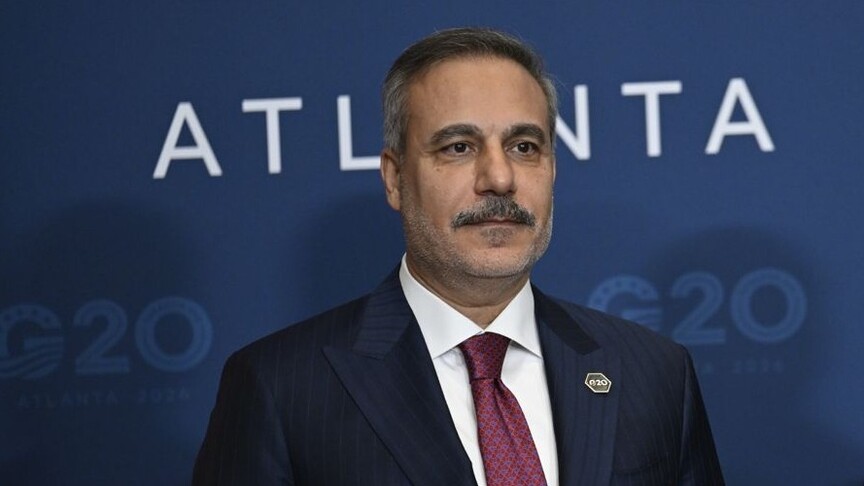
During a two‑day G20 foreign‑ministers’ meeting in Atlanta on November 1, 2026, Turkish Foreign Minister Hakan Fidan said Ankara had offered practical solutions to global crises, while U.S. Secretary of State Marco Rubio highlighted the importance of energy security and supply‑chain resilience.
Fidan told Anadolu and a Turkish public broadcaster in the city that the meeting was “particularly timely given the growing number of global crises, including energy disruptions and mounting pressure on international supply chains.” In the sessions that the Turkish minister described as focusing on global crises, energy security, and supply‑chain disruption, he says Ankara presented proposals to address bottlenecks in the Black Sea, Gulf, and Red Sea, warning that “disruptions in these strategically important waterways are seriously affecting global trade and supply networks.”
“Global supply chains have been severely disrupted,” Fidan added, noting that discussions such as those held at the two‑day forum were intended to explore how the international community could “remedy or resolve these issues.” He further remarked that “discussions involving Russia and countries supporting Ukraine are not always easy”—especially regarding the Black Sea situation and the energy consequences of the Russia‑Ukraine war—but insisted these talks were necessary for “clear communication of positions and exploration of potential solutions.”
In his remarks, Fidan emphasized that Turkey seeks to distinguish itself “through meaningful contributions rather than simply taking a different position from other countries.” He noted that Ankara’s mediation role was “more important” than merely adopting a distinct stance.
On the other side of the mirror, U.S. Secretary of State Marco Rubio concluded the gathering by stressing that the G20 had refocused on its “original economic mission.” At the end of the two‑day event, Rubio told reporters that the forum had “focused on core economic, energy, technology, and supply chain challenges, and we addressed practical solutions and real outcomes.” He underlined the need to secure access to critical minerals essential for advanced technologies, warning that disruptions to supply chains could have far‑reaching consequences for economic growth and everyday costs.
Rubio said that participating countries “shared an understanding of the challenges, although differences remain over how to address them,” adding that “we all agree there's a problem, but obviously there's work to be done to find agreement collectively on solutions.” He highlighted the importance of energy security and freedom of navigation, noting that attacks on commercial shipping in the Strait of Hormuz and other strategic waterways could disrupt energy, fertilizer, and agricultural shipments, thereby creating wider food security risks.
During the discussion, the U.S. official also mentioned cooperation through the Quad grouping of the U.S., India, Japan, and Australia, pointing to critical minerals, infrastructure, and maritime security as areas for practical cooperation.
Both Japan's and Australia’s interests in securing critical minerals and navigating maritime security converged with Turkey’s calls for deeper dialogue, indicating a shared commitment to ensuring supply‑chain resilience.
These exchanges highlight how national institutions, such as the G20 foreign‑ministers' forum in the United States, and the executive branches of member states negotiate complex global problems, influencing not just international diplomatic relations but also the stability of trade routes that feed local economies worldwide. The practical proposals offered by Turkey, together with the U.S.’s emphasis on cooperation, underscore how diplomatic engagement directly affects everyday citizens, from the prices of goods to the security of the energy grid.
While the meeting did not commit new binding agreements, it set a precedent for Turkish and American leaders to collaborate on safeguarding shipping lanes and stabilizing supply chains. The next step, according to Fidan, would involve turning discussion into actionable plans, while Rubio suggested that the outcomes of the meeting would shape policies ahead of the scheduled G20 leaders' summit in Miami in December.