In brief
At the General Assembly of Judges in Sofia on October 31, 2026, Maria Terziyska, a candidate for the Supreme Judicial Council, highlighted the need to update the council’s secondary legislation governing court staff and administration. She emphasized that modernizing ethical rules and ensuring active judge participation are essential to restoring public confidence in Bulgaria’s judiciary.
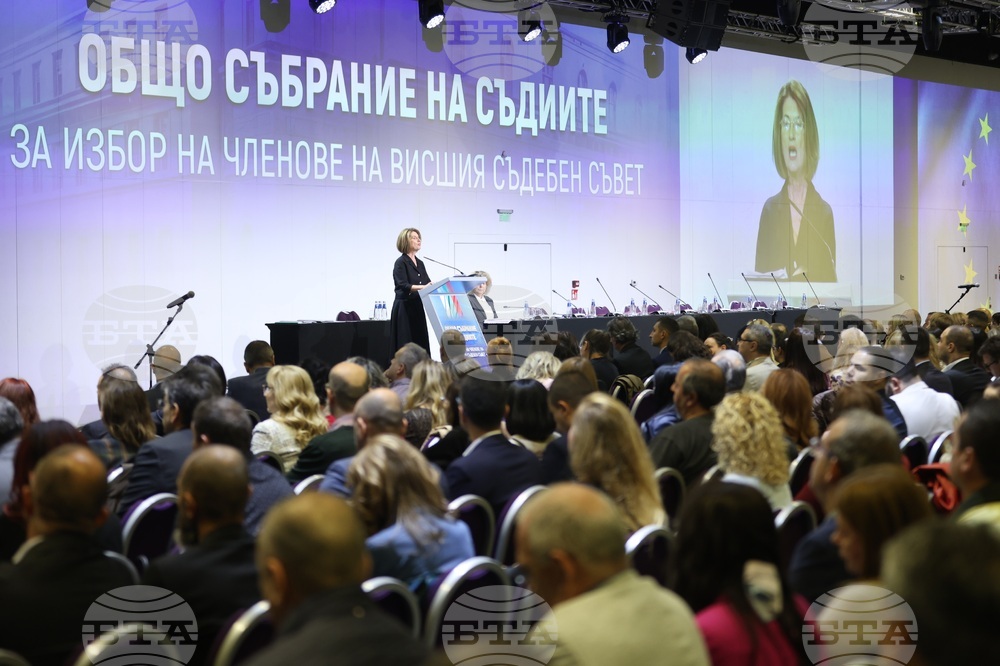
Sofia, October 31, 2026 – During the General Assembly of Judges held at the Sofia Event Center, Maria Terziyska, a candidate for the Supreme Judicial Council (SJC), urged the council’s next composition to prioritize an overhaul of its secondary legislation.
The Assembly, organized to elect representatives to the SJC, gathered judges from across the country to discuss reforms that could shape the future of Bulgaria’s judicial system. BTA reported that Terziyska presented her case before the gathering, framing the legislative update as a foundational step toward a more effective and trusted judiciary.
Terziyska is a judge at the Varna Regional Court and has served as a deputy chair candidate for the SJC. In her remarks, she highlighted her accumulated experience within the judicial system and her desire to contribute to the development of a functioning SJC that aligns with contemporary legal needs.
She stated that the council should focus on revising the secondary laws that dictate the status of court staff and the administration of court facilities. According to BTA, Terziyska believed that clear rules governing these areas would promote operational efficiency and reduce administrative bottlenecks within the judiciary.
In addition to administrative matters, Terziyska opened up a broader conversation about the ethical conduct of magistrates and their role in the public’s perception of justice. BTA documented that she argued the current ethical guidelines were inadequate to meet the expectations of a modern legal society.
"As a judge, I always strive to apply the law correctly and fairly and to observe the principles of ethical conduct for magistrates. I maintain that professional integrity is an essential and necessary part of quality justice," Terziyska said.
She referred to the rising frequency of public calls to investigate the professional integrity of certain judges and prosecutors. BTA noted that these concerns highlighted a need for transparent and robust ethical regulations that could address scrutiny and maintain accountability.
Terziyska’s proposal also touched on the importance of the active participation of judges in shaping the council’s vision and nature. She argued that a council built on a clear mandate and open judge involvement is more likely to secure the confidence of the citizenry.
Central to her advocacy is the belief that legislation exclusively addressing court staff status, administration and ethical conduct would provide a more stable foundation for judicial operations. By establishing updated rules, the SJC could better manage human resources, resource allocation and procedural fairness.
The reform has implications for civic accountability. If the SJC’s secondary legislation is brought in line with modern standards, the public could see less for accountability interventions involving judges and prosecutors, potentially leading to a more trustworthy judiciary.
Should Terziyska’s viewpoints resonate with her peers, an upcoming council could be tasked with drafting a comprehensive legislative update that would be presented directly to the parliament for enactment. The success of such a proposal would rely heavily on meticulous drafting, public consultation and legal review.
In the end, Terziyska highlighted that the urgency of the proposal stemmed from current public expectations and the council’s responsibility to uphold justice with integrity. BTA captured her final remark as a call for a new legislative vision that keeps the judiciary both effective and transparent.