In brief
In a campaign for a seat on the Supreme Judicial Council, Nadya Pelovska‑Dilkova stresses that Bulgarian judges deserve recognition of their professional rights and a data‑driven reform plan. She reaffirms her decades of judicial work, advocates for workload regulation and career development, and warns against court closures without comprehensive reforms.
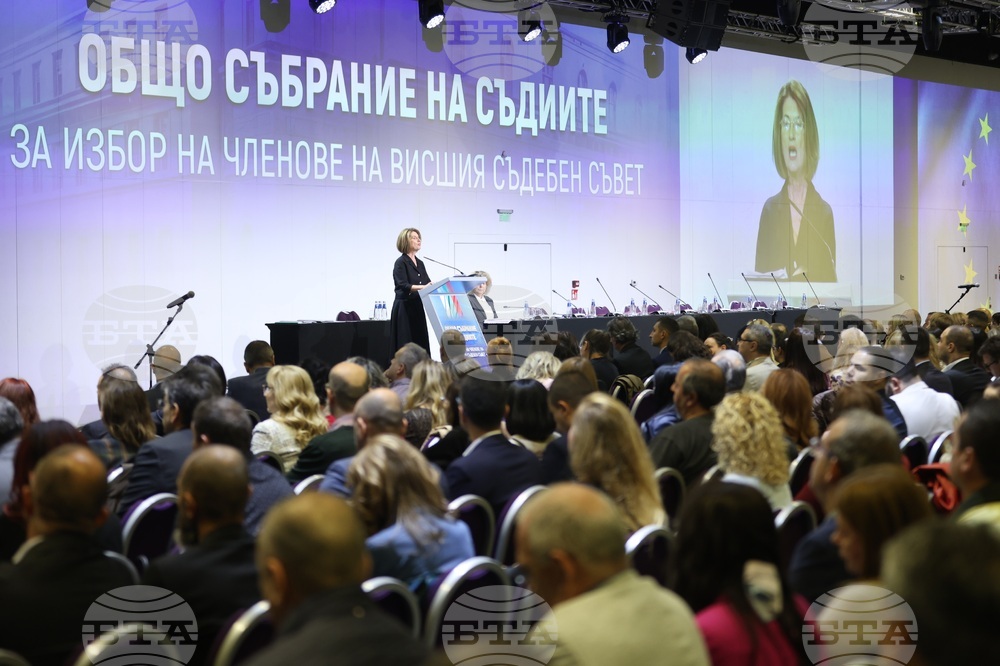
Nadya Pelovska‑Dilkova, chair of the Vratsa Regional Court and candidate for the Supreme Judicial Council, announced her platform during the General Assembly of Judges on Tuesday, October 31, 2026.
Pelovska said, I have spent my entire 30‑year working life as a judge, which is precisely why I am confident that Bulgarian magistrates are honest, intelligent, hard‑working and respected in their communities. They deserve respect and recognition of their professional rights and interests.
"I have spent my entire 30‑year working life as a judge…They deserve respect and recognition of their professional rights and interests," Pelovska told the assembly.
She highlighted that her tenure as an administrative head had brought unity, effective organization, and a strong reputation for the Vratsa Regional Court among both coworkers and local residents.
During the assembly, Pelovska also reflected on the election of new SJC members from the judges’ professional quota, noting "I cannot help but be pleased that, as a result of my work as an administrative head and the efforts I have made, judges and courts in the judicial district are united, well‑organised and working effectively," she added.
Central to Pelovska’s proposal is the establishment of a five‑year strategy for the Supreme Judicial Council. She outlined that the strategy should set concrete goals, define deadlines, and implement accountability mechanisms that involve both judicial and public stakeholders.
The candidate identified six core elements for the strategy: regulation of court workloads to curb overburdening; transparent personnel policy; deliberate career development pathways for magistrates; disciplined practice guidelines; allocation of budget funds to better support courts; and robust communication with the public and other government branches.
Pelovska warned that proposals to close or merge courts would be ineffective without accompanying reforms. She emphasized that a thorough judicial transformation must incorporate e‑justice tools, simplified procedures, and the necessary technical and financial resources to maintain public access to justice.
The emphasis on data‑driven decision‑making is a hallmark of Pelovska’s approach. She advocated for the collection and analysis of statistical evidence to guide reforms, ensuring that changes are responsive to actual caseload trends and resource distribution.
She also stressed that any initiative should center on rebuilding public trust in the judiciary. According to Pelovska, public confidence is only sustainably restored when judges are perceived as fair, competent, and supported by an independent and well‑resourced system.
Pelovska’s candidacy has been met with support from a segment of the court community that shares her concerns about workload pressures and institutional support. Critics, however, argue that the proposed reforms might be too broad to implement in the short term, citing the complexity of coordinating budget allocations across multiple regions.
While the SJC election remains a purely professional process, Pelovska’s public statements connect the academy’s internal politics with wider civic issues. Her emphasis on transparency and accountability resonates with the public’s demand for a judiciary that is both efficient and trusted.
For judges, Pelovska’s platform directly addresses professional rights and career prospects, offering a clear framework for advancement and workload management. For the general public, the promise of improved access to justice, effective e‑services, and a stronger sense of judicial integrity speaks to civic concerns about fairness, accountability, and the rule of law.
The Candidate’s Vision for Judicial Reform
Pelovska’s vision for the Supreme Judicial Council is rooted in her 30‑year experience as a judge. By advocating for a data‑based strategy that extends over five years, she seeks to align the judiciary’s internal needs with public expectations while maintaining judicial independence.
Her insistence on safeguarding judges’ professional rights—through official recognition, workload regulation, and career development—positions her as a candidate focused on the welfare of those who administer justice. In doing so, she also underscores that a competent judiciary is essential for the stability of the entire democratic system.
Ultimately, Pelovska’s appeal extends beyond the immediate candidates for the Supreme Judicial Council. It frames the judiciary as a civic institution whose reforms will ripple across all layers of Bulgarian society, influencing elections, court access, and the overall perception of public accountability.