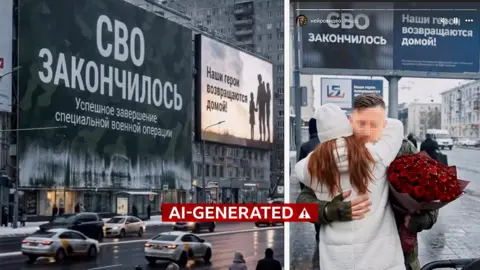
As the Russian war in Ukraine escalates, families of soldiers killed on the front are looking to artificial intelligence to create what they call “farewell” videos – portrait‑like, fully‑animated scenes of their loved ones embracing relatives, walking toward heavenly staircases, or gently waving from beyond. In a 15‑second clip that went viral, a mother in Moscow reenacts the moment her husband, presumed dead, returns home; the footage is made by the popular content creator Katya Jin and mimics her real‑life appearance.
These deepfake productions have become a lucrative business. In Russia, the price can range from 200 roubles (£2) to 10,000 roubles (£100). Creators such as Ulyana Lebed report monthly earnings of 150–200,000 roubles (£1,500‑£2,000), twice the national average wage.
The ethical debate is intense. Universities and policy groups warn that AI “deadbots” are difficult to regulate and may shape public memory of war. Dr. Katarzyna Nowaczyk‑Basiński notes that the technology risks “deeply distorting” memories and that its relevance for coping with grief is uncertain.
Some families report that the videos do not soothe their pain. One woman, after purchasing an AI portrait for her late husband’s headstone, said “No, it did not help – how could it?” Others claim the clips bring a sense of connection, even if the reunion is fictional.
Russian authorities warn against anonymous use of AI content that can spread propaganda. Meanwhile, Ukrainian viewers see these clips as a callous attempt to glorify Russian soldiers, with some posting harsh condemnation online: “You should be ashamed to show your ‘heroes’ who went to earn blood money by killing our children.”
Despite the controversy, the industry continues to grow. The booming market for post‑humous avatars is part of a broader “digital afterlife” sector that has already found its way into museums, courtroom displays, and political campaigns worldwide.