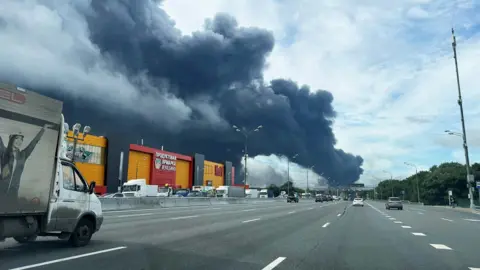
On June 18th, Moscow endured the biggest Ukrainian drone strike since the war’s start, with nearly 200 unmanned aircraft swooping across the capital’s airspace. The bombardment left a thick, smoking column in the sky and alarmed residents in the surrounding regions.
Local governor Andrei Vorobyov confirmed that 17 people were wounded, but casualty reports remain limited amid the chaos.
Meanwhile, the Russian defence ministry announced that it intercepted and destroyed almost 1,000 drones and four Ukrainian cruise missiles in a 24‑hour sweep across the country. An oil depot in the southern Rostov province also suffered a hit, resulting in one fatality.
President Volodymyr Zelensky described these incursions as “long‑range sanctions,” a diplomatic euphemism for the Ukraine’s engaging, long‑distance strikes against Russian targets.
With such a large‑scale raid, analysts are asking whether President Putin’s strategy will shift: will Moscow change its tactics or intensify its air‑defence deployments? The coming days may reveal how Russia adjusts to this evolving frontier of unmanned warfare.