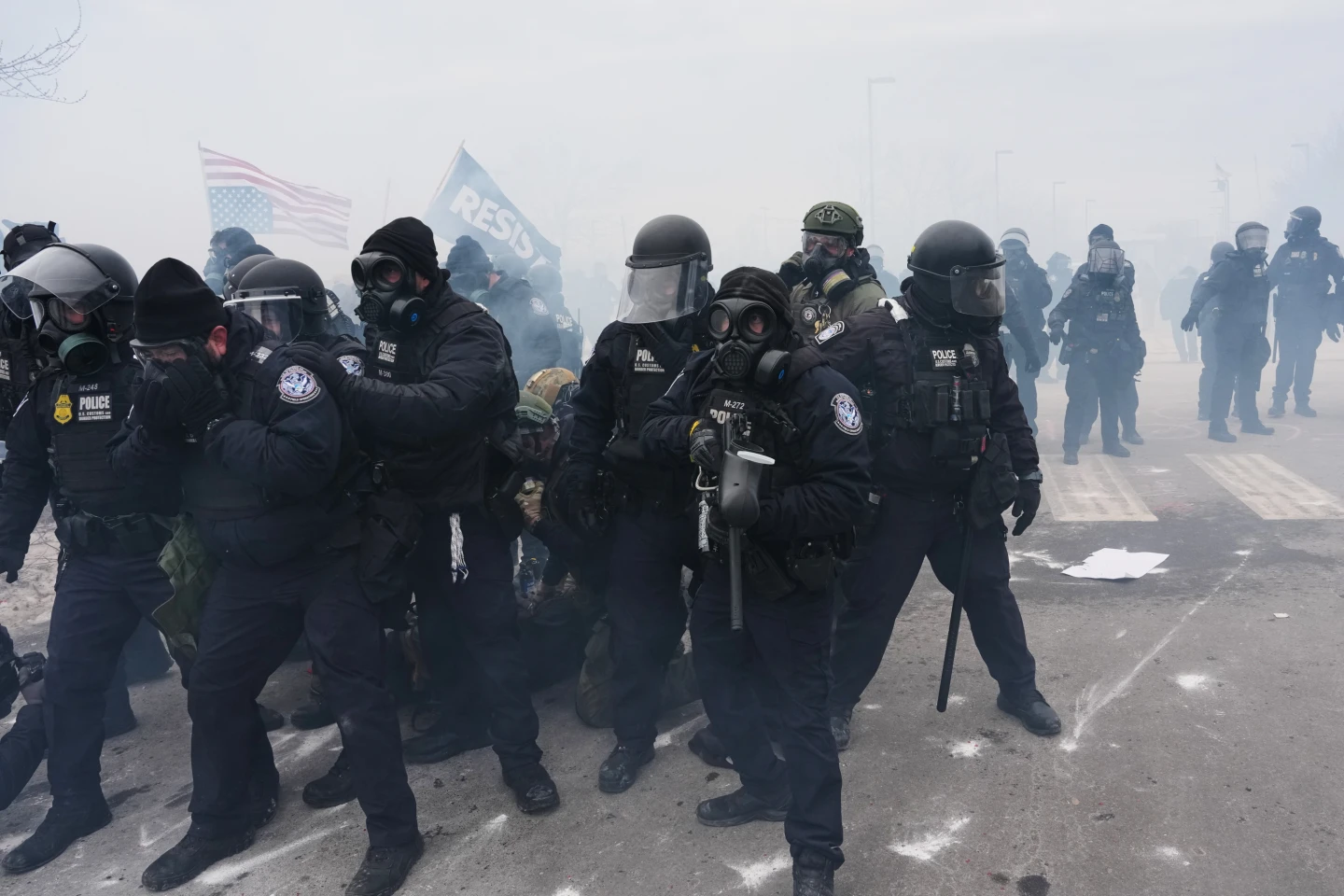
As its immigration crackdown in Minneapolis intensifies, the Trump administration is leaning into messaging that borrows from phrases, images, and music about national identity that have become popular among right-wing groups.
On January 9, two days after a U.S. Immigration and Customs Enforcement agent’s shooting of Renee Good sent tensions in Minneapolis to a fever pitch, the Department of Homeland Security posted to social media an image of a man on a horse riding through a snowy, mountainous landscape with the words “We’ll have our home again.” This phrase originates from a song used by self-described “folk-punk” bands popular with the Proud Boys and other far-right groups.
The next day, the Department of Labor posted on X: “One Homeland. One People. One Heritage. Remember who you are, American.” Critics noted the similarity to a notorious Nazi slogan.
As President Trump intensified his pressure campaign to claim Greenland, the White House shared a message inviting viewers to choose between paths aligned with American, Russian, or Chinese flags, further reflecting themes common in nationalist discourse.
The administration's messaging has rekindled discussions regarding its habit of cryptically using imagery associated with far-right rhetoric, argued to bolster support among Trump’s base for the immigration policies framed as safeguarding American values.
The administration responded to criticism by asserting that mainstream media mischaracterizes its messaging. White House spokeswoman Abigail Jackson dismissed claims connecting their posts to white supremacy as “boring and tired.”
Some legal experts suggest that the administration's strategy isn't simply mimicking known extremist phrases but rather a calculated adaptation designed to resonate with a specific audience while evoking a broader sense of nationalism.
Trump's narratives have historically engaged various voter demographics, despite accompanying unrest and continued accusations of his administration validating white supremacist ideologies.