The last nuclear weapons control treaty between the US and Russia is due to expire on Thursday, raising fears of a new arms race.
The Strategic Arms Reduction Treaty, known as 'New START', signed in 2010 was one of a handful of agreements designed to help prevent a catastrophic nuclear war.
The treaty capped the number of deployed strategic nuclear warheads for each party to 1,550. It also established some transparency including data transfer, notifications and on-site inspections.
The treaty's expiry effectively marks the end of the arms control cooperation between Washington and Moscow that helped bring an end to the Cold War.
On Wednesday, Pope Leo urged the US and Russia to renew the treaty, emphasizing the need to avert a new arms race.
The original START treaty, signed in 1991 by the US and the Soviet Union, barred the two sides from deploying more than 6,000 nuclear warheads. It was succeeded by New START in 2010.
Although Russia suspended the treaty three years ago amid escalating tensions over Ukraine, both countries were still seen to be adhering to its terms.
The agreement had been crucial in preventing the uncontrolled build-up of nuclear weapons and provided transparency measures to avoid misjudging each other's intentions.
The current situation reflects a troubling trend, as other key arms control agreements have also collapsed.
- The Intermediate-Range Nuclear Forces Agreement, which eliminated the deployment of shorter-range nuclear weapons within Europe.
- The Open Skies Treaty allowing reconnaissance flights over each other's territory.
- The Conventional Armed Forces in Europe Treaty, capping the number of tanks, troops, and artillery in Europe.
Britain's former head of the armed forces, Admiral Sir Tony Radakin, warned that the frameworks designed to maintain global safety now risk unraveling, calling the demise of arms control treaties “one of the most dangerous aspects of our current global security.”
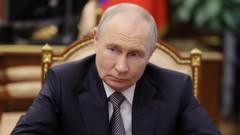
Medvedev, who signed the treaty back in 2010, commented that its expiration should be a warning for everyone. Meanwhile, Russia mentioned it intends to act responsibly following the treaty's collapse.
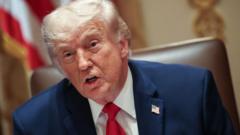
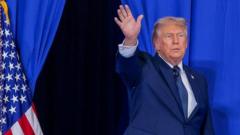
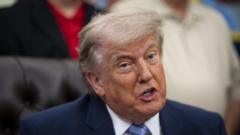
US President Donald Trump has downplayed concerns, suggesting that if the treaty expires, a better agreement could be reached later.
Both nations are modernizing their nuclear capabilities, raising the specter of a new arms race as global nuclear policies shift, complicating any future arms controls.