RALEIGH, N.C. (AP) — In a significant legal decision for North Carolina, a federal judge ruled on Thursday to uphold the state's photo voter identification law. This ruling comes despite protests from civil rights groups who argue that the law unfairly targets Black and Latino voters with discriminatory intent.
The decision made by U.S. District Judge Loretta Biggs provides a major victory for Republican legislative leaders who enacted the law shortly after a constitutional amendment supporting voter ID was approved by voters. Phil Berger, North Carolina's Senate leader, expressed that the ruling should lay to rest any doubts about the law’s constitutionality.
Biggs presided over a non-jury trial where the NAACP and local branches argued against the law, claiming it violated constitutional rights and the federal Voting Rights Act. They claimed the voter ID requirement was designed to diminish the voting power of groups traditionally aligned with the Democratic Party.
In contrast, defense attorneys for the Republicans argued that the law is neutral regarding race and is among the least stringent voter ID laws in the U.S., containing numerous forms of acceptable identification that were not permitted under previous legislation.
They also maintained that the intent behind the law is to foster confidence in voting and prevent any potential electoral fraud, despite the fact that such fraud is extremely rare across the country.
In her ruling, although Biggs acknowledged that the law could disproportionately affect Black and Hispanic voters, she noted that prior judicial precedents necessitate a presumption of good faith in legislative actions, thus limiting the weight given to historical discrimination concerns.
The president of the NAACP in North Carolina, Deborah Dicks Maxwell, described the ruling as “deeply disappointing,” voicing concern that it overlooks the persistent barriers faced by minority voters affected by voter ID laws. The state has begun implementing the 2018 law in municipal elections, following a prior decision by the state Supreme Court to uphold it.
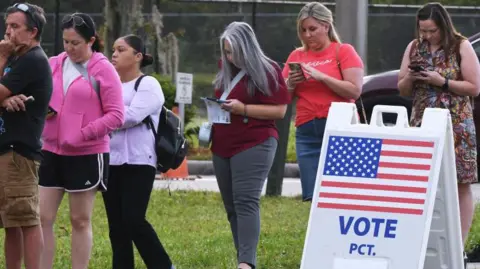
Notably, Biggs indicated that while evidence suggested the law posed additional burdens on minority voters, she was bound by legal precedents to prioritize the presumption that the law was enacted in good faith. Nationally, a total of thirty-six states have laws requiring voter identification, with a number of these laws requiring photo IDs.
Upcoming appeals or responses to this latest ruling remain to be seen, as advocates for minority voting rights continue to express concern over such laws and their effects on participation in the electoral process.