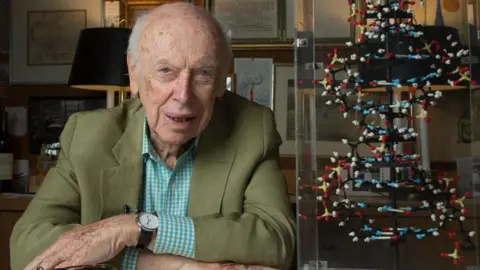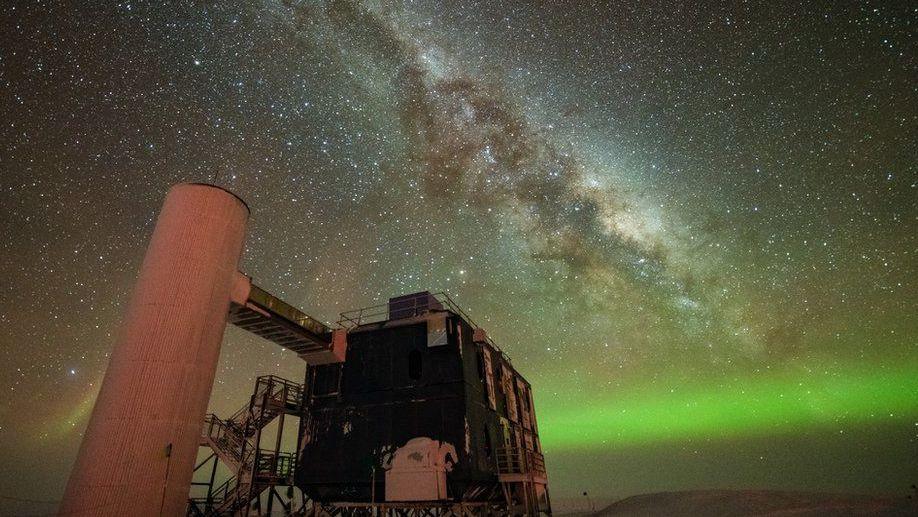

Belgian‑born physicist Professor Francis Halzen has won the 2026 Nobel Prize in Physics for pioneering the IceCube Observatory, a gigantic detector buried in Antarctic ice that captures elusive ghost particles from space.
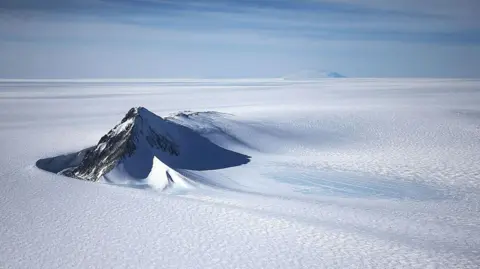
IceCube uses a cubic kilometre of the South Pole’s clear ice, outfitted with thousands of light sensors to pick up the faint flashes produced when high‑energy neutrinos strike a nucleus. These neutrinos carry pristine information about violent, distant cosmic events.
Mark Pearce, chair of the Nobel Committee for Physics, said “Professor Halzen’s vision and scientific leadership have paved the way for a new kind of astronomy.”
Halzen, now a U.S. citizen and professor at the University of Wisconsin‑Madison, told a press conference that he had never expected the idea would work so well, adding that “the tradition of daring scientific experiments—and his own confidence—made it happen.”
Neutrinos travel almost unimpeded through the cosmos, passing through planets, stars and even the Earth itself. In IceCube, they occasionally collide with the ice, generating charged particles that emit a brief blue glow detected by the sensors. The timing and pattern of this light let scientists reconstruct the neutrino’s direction and energy, pointing back to its origin.
Because neutrinos are neutral and barely interact with matter, they can escape the dense cores of supernovae, black‑hole accretion disks and other extreme environments that ordinary light cannot reach, giving IceCube a unique window onto the most energetic processes in the universe.
“The discoveries that have followed are helping us understand some of the most mysterious phenomena in the cosmos,” said Louis Barson, director of science at the Institute of Physics in London.
As physicist Subir Sarkar quoted Marcel Proust, “The only true voyage of discovery … would be not to visit strange lands but to possess other eyes.” Halzen’s work realizes that voyage, opening a new window on the universe through the eyes of countless invisible particles.