India has embarked on a momentous journey with its 16th census, marking the world's largest demographic exercise as it aims to count over one billion people. For the first time in over fifteen years, this endeavor will involve more than three million officials who will traverse the country's diverse geography to gather crucial data.
The census questionnaire consists of 33 questions, probing into various aspects of life such as housing conditions and access to technology. These inquiries are critical as the census not only serves as a count of citizens but also influences key policies, welfare programs, and political representation across India's vast landscape.
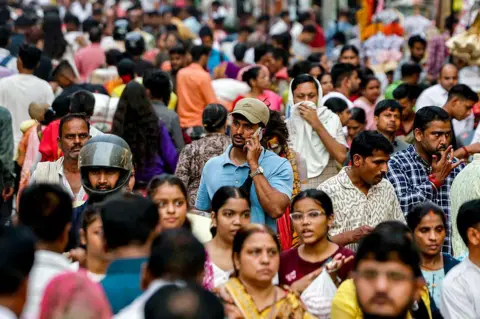
India is now home to more than 1.4 billion people, having surpassed China as the most populous nation earlier this year. This demographic milestone underscores the urgency of collecting updated statistical data to inform ongoing policy decisions. Notably, the median age in India is 28, with nearly 70% of the population at working age, emphasizing the need for targeted employment and social programs.
The last national census was conducted in 2011, with the 2021 iteration delayed due to the pandemic and logistical challenges. The current exercise promises a more streamlined process leveraging digital technologies, enabling officials to collect and submit data via mobile applications. Additionally, self-enumeration will allow citizens to provide their details online in multiple languages, facilitating broader participation.
This census, which will also encompass sensitive caste data, is crucial for tackling pressing societal issues and adjusting policies to reflect the changing social landscape. As India renews its demographic insights, the ultimate goal is to ensure that governance is informed by real-time data, guiding its vast welfare programs and correcting for disparities that have arisen in the past decade.
With the exercise commencing initially in selected regions, the full-scale implementation will encompass a comprehensive survey of every state and territory, shaping the future of India's policies for years to come.