Inside Iran's Turbulent Protests: Perspectives from Both Sides
As protests continue to sweep across Iran, citizens both within and outside the country share their views on U.S. intervention as a beacon of hope or a potential disaster.
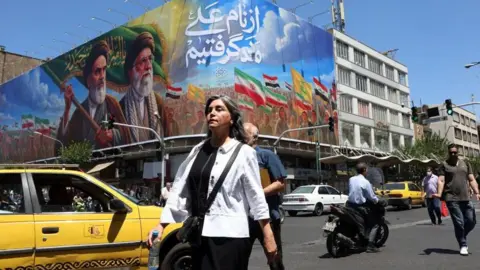
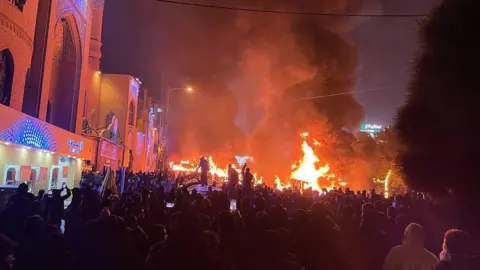
For individuals like Mojdeh, the question of U.S. intervention has become personal. During a recent visit to Tehran, she and her husband were caught in a maelstrom of protests and unrest. Stranded with canceled flights and a darkened communications network, they found themselves participants in a revolution that felt inevitable. Life was on pause, she recounts, a sentiment echoed by countless others.
Driven by profound anger over economic despair, protesters demanded an end to the Islamic Republic, with security forces responding harshly. While the true death toll is uncertain, various reports indicate that thousands have died amidst this chaos.
Views on potential U.S. involvement have sparked fervent debate among the Iranian diaspora. Some, like Shirin, favor foreign intervention, arguing that the global community must act decisively to curtail the violence for the sake of stability beyond Iran's borders. Conversely, others worry that any intervention could be catastrophic for their families still living under the regime.
Amidst the heavy backdrop of such turmoil, the desire for regime change must align with an internal consensus among the Iranian people, a point emphasized by Roozbeh Farahanipour, a former political prisoner who advocates for a grassroots movement and cautions against foreign intervention that could further endanger lives.
Betraying a collective fatigue and fear, Iranians now wrestle with the hope of change and the reality of their dire circumstances. They recognize the cost of inaction, echoing sentiments like that from activist Hemad Nazari, who captures the urgency felt by those risking everything in pursuit of freedom: There is no other way.
In this ongoing struggle, Iranians express their concerns for the fate of their compatriots at home, with many emphasizing that time may be running out and the time for action is now.