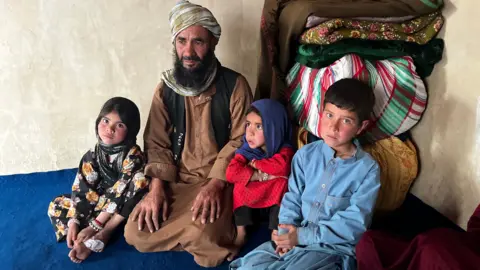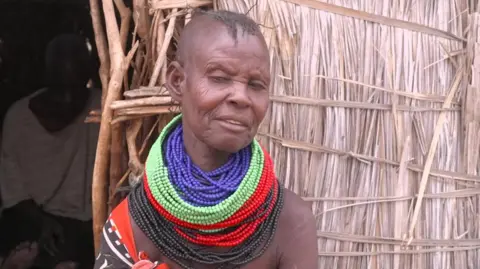
Lotkoy Ebey has just five scrawny goats to her name where she once had 50. She has watched the rest of her animals die as the pasture has dried up due to a prolonged drought in her part of north-western Kenya. In her culture in Turkana, where livestock are not merely a source of money but are central to life itself, the depletion of the herd is a disaster that will be hard to recover from.
Although rains have recently started falling in several parts of the country, officials caution that relief will not come immediately to Turkana. According to experts at the local National Drought Management Authority, the rains have been uneven, with some parts of Turkana receiving little to none. The drought has affected a vast stretch of land across East Africa, leaving some 26 million people facing extreme hunger in Kenya, Ethiopia and Somalia, according to humanitarian organisation Oxfam.
For Ebey and her household, eating twice a day has become a luxury. More often, she survives on a single meal, if that, and sometimes goes five days without eating a proper meal. The only option left for many like her is to walk into the scrubland to search for food.
Under the shade of a nearby tree in Kakwanyang village, three women sit together pounding wild brown fruits from the gingerbread tree, known locally as mikwamo. These fruits, once seen as casual snacks, are now one of the few available food sources for many families. However, finding the fruits is not easy, as villagers frequently embark on three-hour journeys into the wilderness.
The fruit tastes like gingerbread and can quickly fill a stomach, but it cannot be eaten in large quantities as it can lead to drowsiness and stomach issues. The desperation is palpable, as many are forced into foraging while calling on the county and national governments for urgent assistance.
As food distributions dwindle, with little support arriving from the government or humanitarian agencies, the hunger crisis continues to worsen. Turkana county's drought management team reveals that more than 320,000 people are in urgent need of food assistance. Local and international organizations are attempting to respond, but the need remains far greater than available resources.
The Red Cross is working to distribute limited food supplies to the most vulnerable households, while the Kenyan government has plans for food and livestock feed distribution. However, officials warn that the scale of the crisis is enormous, with millions of people across Kenya being affected.
For individuals like Lotkoy Ebey, survival hinges on scarce resources and foraged provisions, underscoring the urgent need for humanitarian support in the face of ongoing drought conditions.