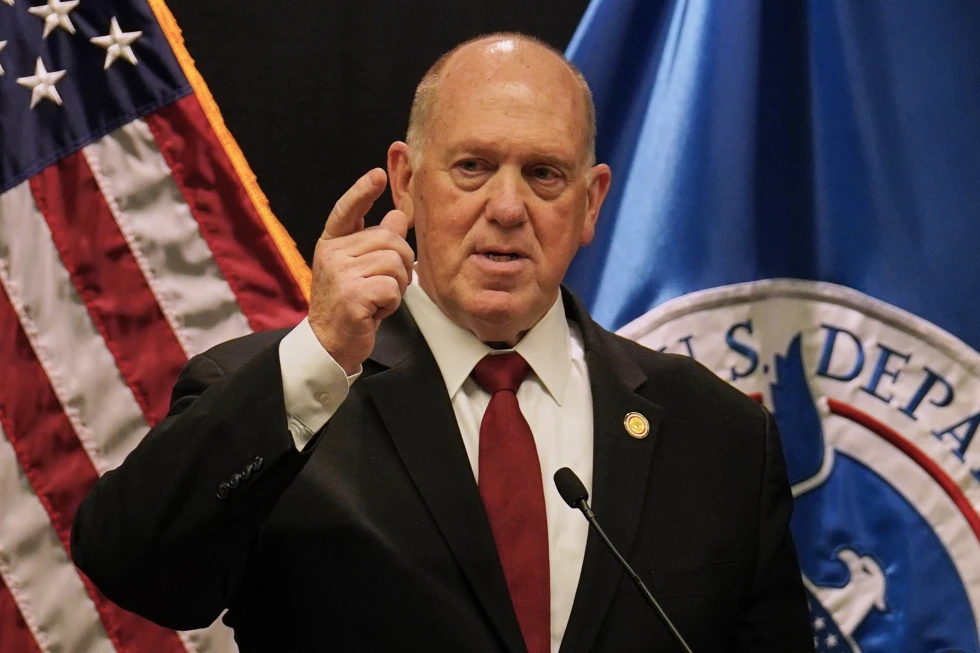
WASHINGTON (AP) — White House border czar Tom Homan’s announcement that enforcement in Minnesota was being unified under U.S. Immigration and Customs Enforcement (ICE) followed months of internal grumbling and infighting among agencies about how to carry out President Donald Trump’s mass deportation campaign.
Since its creation in 2003, ICE has conducted street arrests through 'targeted enforcement.' Homan frequently applies this term to describe focused operations with specific targets, contrasting sharply with broader sweeps common under Border Patrol direction in Los Angeles, Chicago, and Minnesota.
Despite internal tensions, the leadership change illuminates how ICE and Border Patrol have clashed over enforcement styles and tactics under Trump's administration. Support for ICE has been declining as more Americans express concerns over the agency’s aggressive practices.
Homan claimed that recent changes in Minnesota would streamline operations, allowing ICE to consolidate efforts under its enforcement and removal operations unit, enhancing accountability. He stated that the operation aims to ensure compliance with existing rules.
While Homan’s comments reflect a determination to establish unity, this shift comes amid public outcry over recent incidents where ICE operations have turned deadly, highlighting the urgent need for a more systematic approach.
Operational Outlook and Future Challenges
Homan emphasized a more organized approach in recent statements while acknowledging that improvements are needed. Experts note that tensions between ICE and Border Patrol persist, particularly with contrasting tactics that have historically marked their operations. Homan’s push for targeted efforts looks to align with a more investigative-based strategy rather than the chaotic sweeps previously employed.
As discussions of reform continue, the community's response to ICE's actions will remain crucial in shaping the future of immigration enforcement strategies in Minnesota and across the United States.