In brief
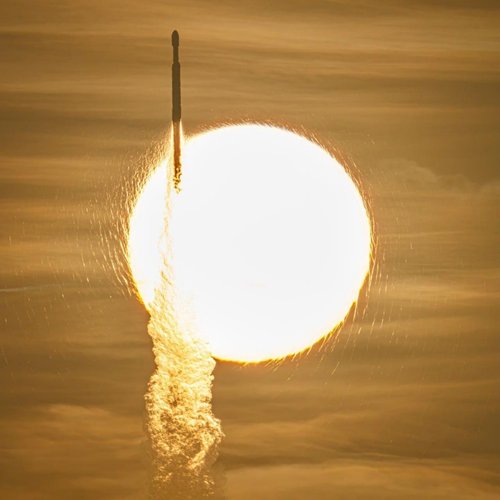
NASA launched a specialised rescue craft to intercept the Swift space telescope, which is falling toward Earth due to orbital decay. The mission, built by Katalyst Space Technologies in eight months, will use three robotic arms to capture Swift and lift it back to a stable orbit. Scientists say the endeavour is high‑risk but essential for preserving vital gamma‑ray burst research, and success could pave the way for future satellite rescues.
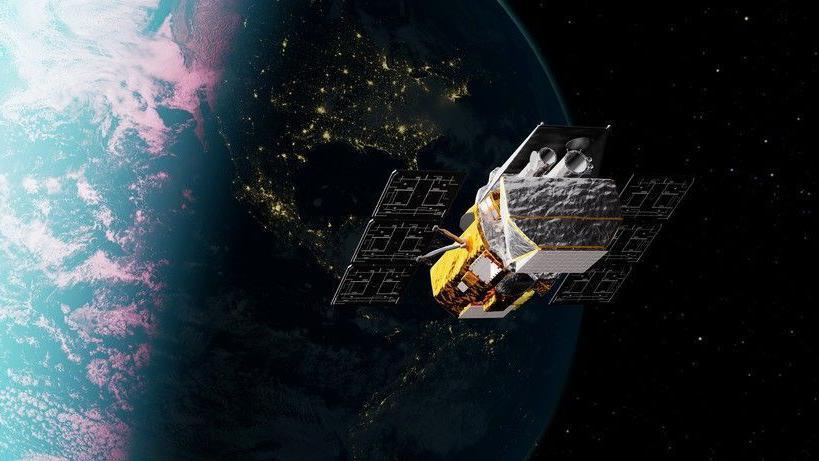
A NASA‑funded spacecraft called LINK has been launched to catch NASA’s aging Swift observatory, which is slipping into Earth’s atmosphere because the planet’s upper atmosphere is being pushed higher by solar activity. Swift, launched in 2004, normally hovers 600 kilometres above Earth; it now orbits only 360 kilometres, a altitude that will drop it to Earth’s surface in less than six months.
The rescue craft, small enough to fit inside a standard launch vehicle, carries three robotic arms and a suite of cameras and guidance systems. Its mission is unprecedented – it will approach the telescope, attach via the arms, then use its thrusters to lift Swift back to a stable 600‑kilometre orbit.
“The Swift telescope was never designed to be caught in space and have its orbit changed,” said Dr Simeon Barber, senior research fellow at the Open University. “We are taking a bold risk, but the science community believes it pays off.”
Katalyst Space Technologies in Flagstaff, Arizona, completed the craft in record time. CEO Ghonhee Lee explains that the team had less than a year from design to launch, completing testing, integration and final assembly within eight months.
After the launch, LINK will spend a few weeks calibrating its systems – power, navigation, cameras and sensors – before closing in on Swift. The capture requires a careful, slow approach, as Swift’s structure has been altered by two decades in orbit. If LINK can successfully seize the telescope, it will fire its engines to raise Swift’s altitude gradually over the next two to three months, returning it to a stable orbit where it can resume its vital gamma‑ray burst observations.
The mission’s success would be a milestone for commercial satellite servicing, potentially signalling a future rescue of the iconic Hubble Space Telescope. Meanwhile, scientists around the world remain hopeful that the Swift observatory, which has captured dazzling images of distant stellar explosions, will continue to unlock the mysteries of the universe.