In brief
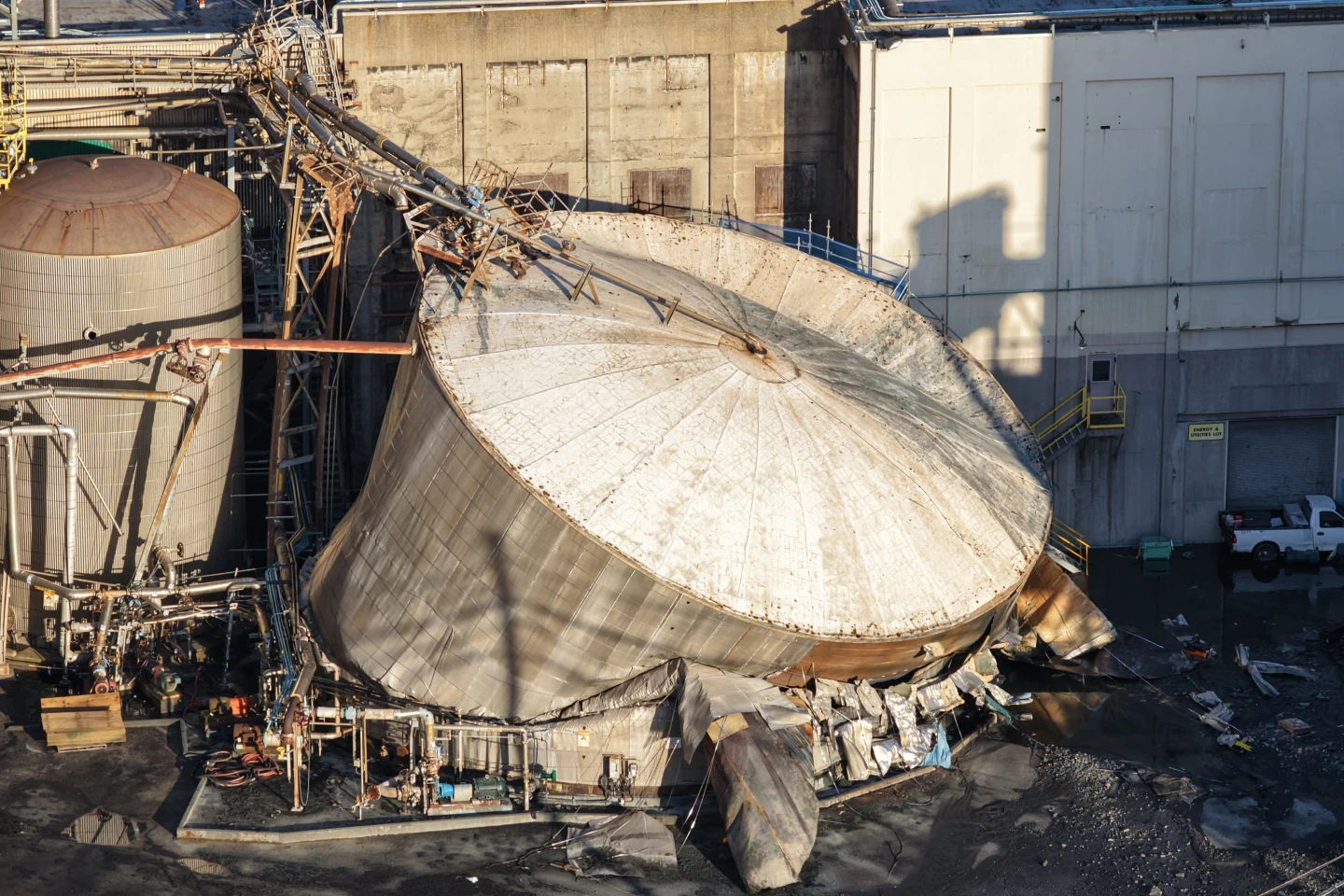
On Tuesday, a large steel tank at the Nippon Dynawave Packaging Co. in Longview ruptured, discharging about 900,000 gallons of white liquor – a sodium hydroxide‑sulfide mixture used in kraft paper production. The implosion caused one confirmed death and injured several people, including a firefighter. Local officials are uncertain whether to stabilize the tank or extract the contents first; the plant remains shut down and the surrounding Columbia River area was cleared of further risk. The event marks a second significant tank failure on the West Coast in recent days, raising questions about safety oversight and triggered community vigils. Nippon Dynawave has faced safety fines and filed complaints that are reportedly unrelated to the implosion.
LONGVIEW, Wash. – An explosive collapse of a 3,000‑ft‑long steel tank at Nippon Dynawave Packaging Co. on Tuesday afternoon sent a toxic cloud of white liquor – a combination of sodium hydroxide and sulfide – into the waterway, killing one worker on site and leaving nine others unaccounted for.The plant, which employs roughly 1,000 people and produces packaging‑grade kraft paper, was operating a tank that had been holding about 900,000 gallons (≈3.4 million liters) of the caustic liquid at the time of the failure. According to plant officials, the tank “bulged, bucked, and then collapsed on one side,” a blow‑off that the Pacific Northwest Fire Prevention Association likened to the ripple effect of a large rupture seen in previous industrial accidents.At 3:12 p.m., emergency crews were dispatched to a site 0.5 mi from the Columbia River. Floodlights illuminated the scene while a hose was secured around the exterior. Firefighters inside the crater suffered soot‑ and burn injuries, while others inhaled the harsh chemical vapors. Among the victims was a dispatched firefighter who sustained moderate burn and inhalation injuries.One employee died on scene. Nine others are missing. We cannot say for sure whether they are still alive or have been transported elsewhere, said Chief Scott Goldstein of the Cowlitz County Fire. Our primary concern is to secure the tank so it does not implode again and release more to the river.The event is the second chemical tank failure on the West Coast in less than a week, following a similar evacuation incident at an aerospace plant in Southern California that prompted thousands of days‑long evacuations.Citizens gathered in the dark on Tuesday night for a vigil at the riverbank. Crystal Moldenhauer, a Longview resident, lamented that while planners tried to coordinate, she “has friends at the plant who remain unaccounted for. We’re all still waiting for answers, because families have been torn apart.”The Washington Department of Labor and Industries had filed two separate safety complaints against Nippon Dynawave in March and May of this year, earlier concerns centred on a valve on a tank. Those complaints were clarified as unrelated to the implosion. Meanwhile, since 2021, the company has been fined $3,400 for three health‑and‑safety violations heard through its Japan‑based parent, the Nippon Paper Group.Scientists noted that white liquor utilized in kraft paper production is a highly caustic material, potent enough that exposure can cause burns, respiratory paralysis, or death. The Marine Bio-chemical Team from the Washington Environmental Protection Agency was notified, and over the next day the surrounding creek was isolated for contamination tests. The Phase‑I environmental assessment points to a risk of bacterial contamination and an increase in alkaline pH up to 12‑14.For the public, the Cowlitz County administration is reinforcing that the surrounding Columbia River is safe. No threat to the wider community at this time, the Rankin City Health Department spokesperson confirmed.The company has vowed to cooperate with the state and federal investigations. Henley, a senior plant manager, said, We’ll inform anything and all information to resolve the accident, and we want truth for our families and community.The investigative team led by the Federal Chemical Safety Authority rolls out a comprehensive review that includes seismic sensors, heat transfer analysis, and piping integrity checks. Results expected by early next week may provide definitive answers.In the meantime, a rescue team equipped with needle‑nozzle patch and absorbent booms continues under a ‘stabilise first, evacuate later’ strategy. Emergency medical teams remain on standby, and the local morgue awaits the body of the confirmed death.The incident further stresses the compiled 40‑plus United States deaths from hazardous chemical incidents between 2021‑2023 (cite the environmental‑justice pdf), which advocates caution in retrofit requirements for such facilities.We’re carrying out the cleanup, while regulators look over it in perpetual detail, Chief Goldstein concluded. We’re all just hoping the missing wonders out and that the community will be safe again as soon as possible.\