In brief
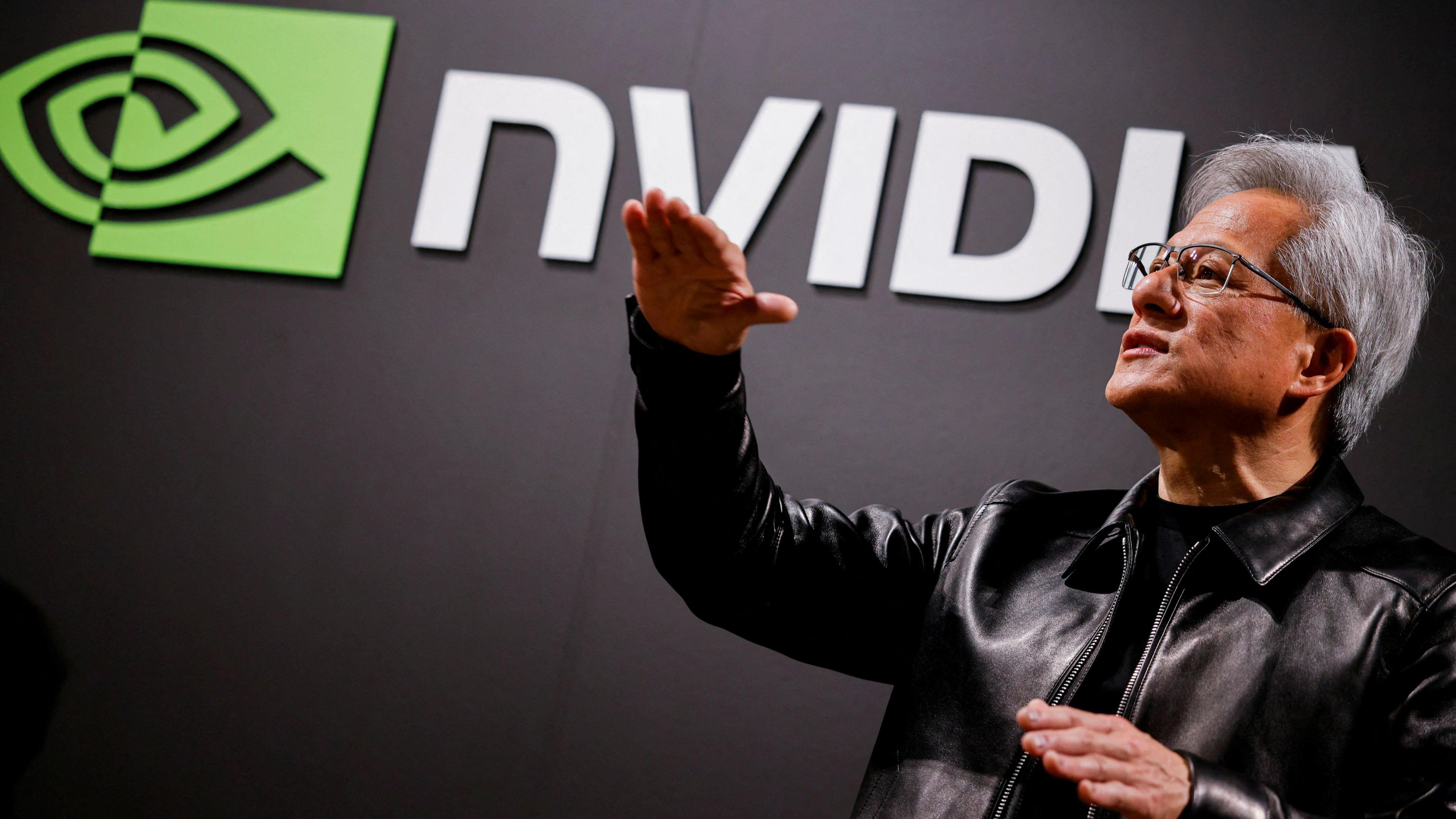
Nvidia has raised a record $500 bn from institutions such as Apollo, BlackRock, Blackstone, Brookfield, Goldman Sachs and KKR to invest in AI infrastructure. Funds will fund Nvidia’s own computing plants and partner‑led data‑centre projects, stoking a global race to supply GPU compute that powers companies from Google to OpenAI. The move marks AI compute as a distinct asset class, following $1 trn spent by firms in the last three years on AI and the relentless demand for more chips and cooling capacity.
In a landmark deal, Nvidia has struck agreements with some of the world’s most influential banks and investment firms—Apollo, BlackRock, Blackstone, Brookfield, Goldman Sachs and KKR—to raise $500 bn ($370 bn) for AI infrastructure. The infusion places the chip‑maker’s compute business side at the centre of a new asset class and fuels the next wave of data‑centre and fabrication facility construction.
Chief Executive Jensen Huang explained that, “In AI, compute is revenue.” He added that the capital will flow into Nvidia’s projects and those of its partners, turning long‑term capital providers into independent underwriters for AI infrastructure.
"Compute has become a critical infrastructure asset," said KKR co‑CEOs Joe Bae and Scott Nuttall. “Our experience shows that delivery, not ambition, is the hard part.”
The funding will back multiple initiatives: construction of new data‑centres that house, operate and cool thousands of ever‑stacked GPUs; expansion of factories that manufacture the AI chips powering those data‑centres; and broadening the availability of GPUs to global tech firms.
The period over which AI-related spending has exploded is extraordinary. In three years, companies such as Google, Meta, Amazon, Microsoft, SpaceX, Tesla, OpenAI and Anthropic have poured in total outlays exceeding $1 trillion on AI projects and infrastructure, and the push for new compute shows no slowdown.
Example of partner deals: BlackRock joined Meta in a Texas data‑centre project, taking a majority stake in the facility; Anthropic struck a partnership with Macquarie Asset Management and Singapore’s GIC to secure further AI infrastructure financing to keep up with demand for its Claude chatbot.
Apollo’s president Jim Zelter noted the shift: “Modern compute is emerging as a scarce, mission‑critical asset class. It is positioned to drive significant long‑term economic growth and productivity gains.”
As Nvidia scales its AI factories, the company’s valuation—already five‑fold higher than three years ago—illustrates the broader market’s appetite for this new infrastructure class. Investors now see AI compute not just as a technology, but as a tangible, investable asset that fuels big‑data AI services across the globe.