Shares in fast‑fashion giant Shein fell sharply in their highly anticipated stock market debut on Tuesday as the firm listed in Hong Kong after a long quest to go public.
After failed attempts to list in the US and UK, concerns over the company’s labour practices and environmental impact proved difficult to overcome.
Once estimated at nearly $100 billion, Shein is now valued at just over a quarter of that figure, as the firm grapples with heated competition and trade tensions.
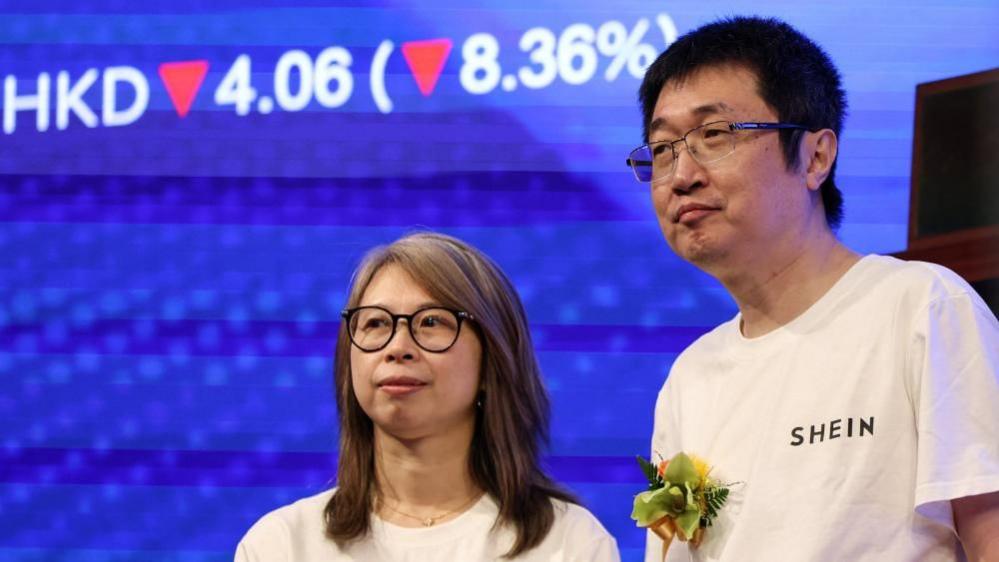
Founder Xu Yangtian and financial director Poppy Bao stood on stage during the listing ceremony, with the firm’s shares opening 8.7 % lower at 44.4 HK$.
Priced at 48.56 HK$ each on Monday, the company raised 13.6 billion HK$ (~$1.7 bn) from the listing, giving it a market cap of $26.3 billion.
Growth skeptics say Shein’s business model may struggle to sustain the ultra‑low price point, potentially leading to higher retail prices.
With over 273 million active customers who placed more than a billion orders in the year to March 2026, the company’s supply chain, built across China’s vast network of factories, remains its core strength.
However, the company now faces higher costs, regulatory scrutiny and a market where investors favour technology firms.
Analysts warn that trade tensions and regulatory concerns are reshaping the landscape that once seemed ripe for a global IPO, especially following the US’s removal of a duty exemption for small packages.
Shein’s move to Hong Kong marks the largest new share sale in the city this year, reinforcing its status as a benchmark for the fast‑fashion industry.
Despite a precipitous opening, the firm’s investors will test its ability to maintain margins amid tighter regulation, tariffs and the cost of customer acquisition.