In brief
The ongoing teacher strike in San Francisco has left nearly 50,000 students without classes, forcing parents to devise last-minute childcare plans. With some families relying on after-school programs and others leaning on relatives, the uncertainty continues as negotiations for higher wages and better health benefits unfold. Local teacher union leaders express that the strike is intended to improve educational conditions for students in the long run.
SAN FRANCISCO (AP) — As the teachers' strike in San Francisco extends indefinitely, parents find themselves in a difficult position, seeking ways to care for their children while schools remain closed.
Connor Haught, who works from home in the construction industry, has been balancing virtual meetings with keeping his two daughters occupied at home. With the current strike leaving around 50,000 students without classroom instruction, Haught and many other parents are feeling the pinch.
The big concern for parents is really the timeline of it all and trying to prepare for how long this could go on, Haught remarked.
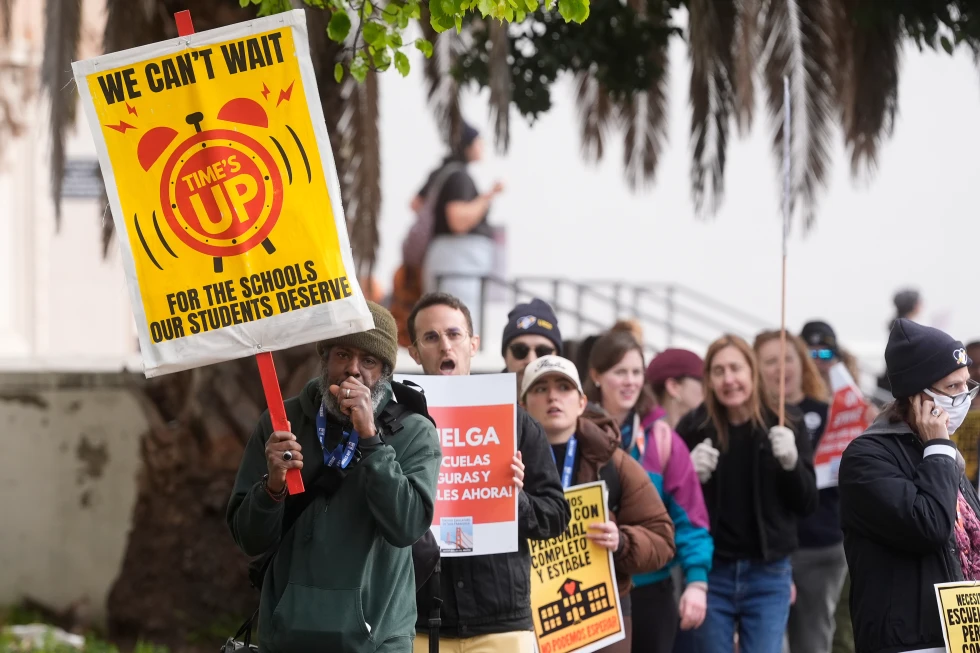
The strike commenced as about 6,000 public school teachers protested for higher wages, improved health benefits, and increased resources for special needs programs. This unprecedented action left the San Francisco Unified School District's 120 schools closed for an extended period.
While some parents have turned to after-school programs that provide full-day care, others lean on family and friends for support. Haught and his wife have planned days together with their children during the strike's initial phase but are unsure of how to manage if it stretches into a second week.
We didn’t try to jump on all the camps and things right away because they can be pricey, and we may be a little more fortunate with our schedule than some of the other people being impacted, stated Haught.
The United Educators of San Francisco have been negotiating with the district for nearly a year, focusing on issues like 100% funded family health care, salary increases, and filling vacant teaching positions critical for special education services.
Teachers standing in solidarity on the picket lines understand the strike's impact on students, yet they affirm their commitment to securing better educational conditions. Lily Perales, a history teacher at Mission High School, emphasized the strike was aimed at enhancing students' future learning environments.
Superintendent Maria Su reported some minimal progress in negotiations, including supportive measures for homeless families and teacher training initiatives. However, the key sticking points remain wage increases and family health benefits.
Meanwhile, parents like Sonia Sanabria are experiencing immediate financial strains. Taking a leave of absence from her job to care for her two children while schools are closed, she relies on makeshift home education with assignments to compensate for missed schoolwork.
They are asking for better wages and better health insurance, and I think they deserve that because they teach our children, take care of them, and help them to have a better future, expressed Sanabria. I just hope they reach an agreement soon.