President Donald Trump has said Iran wants to make a deal rather than face US military action, despite Tehran's insistence that its missile and defence systems will never be up for negotiation.
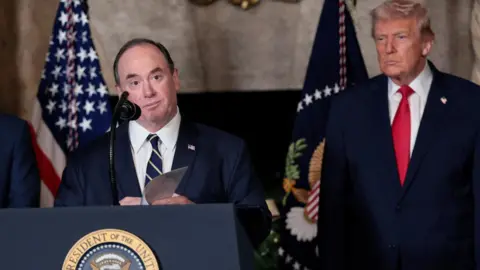
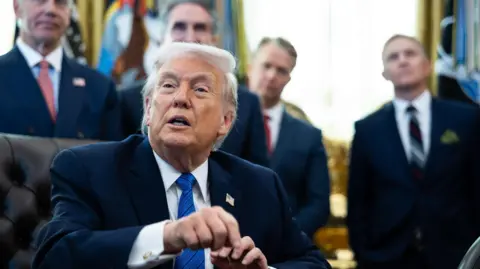
I can say this, they do want to make a deal, Trump told reporters at the White House on Friday when asked about a buildup of US military forces in the Gulf, without providing details.
He had warned Tehran on Wednesday that time was running out to negotiate a deal on its nuclear programme after a large US naval fleet had gathered near the country.
Iran's foreign minister said there were no talks planned with the US at present but that Tehran was open to negotiations based on mutual respect and trust.
Also on Friday, the Kremlin said the head of Iran's Supreme National Security Council Ali Larijani had met Russian President Vladimir Putin.
They discussed Middle Eastern and international issues among other matters, state news agency Ria-Novosti reported.
Iran insists its nuclear programme is entirely peaceful and has repeatedly denied accusations by the US and its allies that it is seeking to develop nuclear weapons.
Asked on Friday whether he had given Tehran a deadline by which to strike a deal, Trump said that only they know for sure.
Hopefully we'll make a deal. If we do make a deal, that's good. If we don't make a deal, we'll see what happens, he added.
Trump mentioned that a large Armada was on its way to the region and declined to give a timeline for its withdrawal: We'll see how it all works out. They have to float someplace, so they might as well float near Iran.
Iran's Foreign Minister Abbas Araghchi had said earlier that the country's missile defence systems would never be on the negotiating table, and repeated the government's position that its nuclear programme was peaceful.
At a press conference with his Turkish counterpart after talks in Istanbul to avert US action, he said preparations were needed for fair and just negotiations.
Trump's warning regarding a nuclear deal on Wednesday came after he had promised Washington would intervene to help those involved in a brutal crackdown on protests in the country earlier this month.
He had said help was on the way, before stating he had been told the execution of demonstrators had stopped.
On Thursday, he stated that he had told Iran that it had to do two things to avoid military action: Number one, no nuclear. And number two, stop killing protesters.
The US-based Human Rights Activists News Agency (HRANA) reported that it had confirmed the killing of more than 6,300 people, including more than 5,900 protesters, since the unrest began at the end of December.
Another group, the Norway-based Iran Human Rights (IHR), has warned the final toll could exceed 25,000.