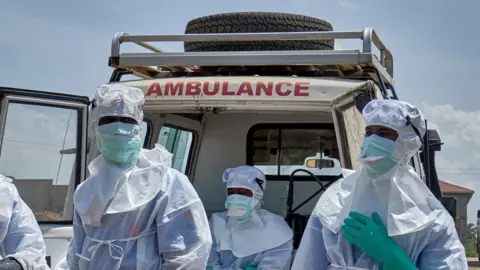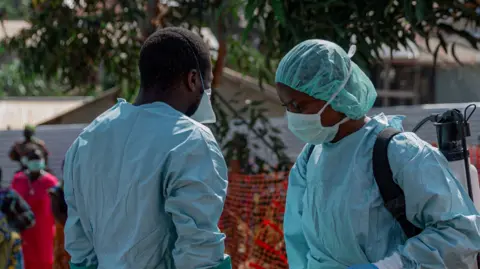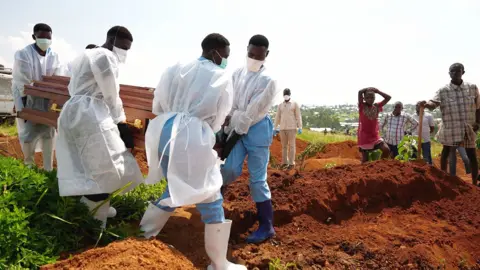
The World Health Organization (WHO) has reported 600 suspected cases of Ebola, alongside 139 suspected deaths, with numbers projected to escalate as detection efforts continue.
Currently, 51 cases have been confirmed in the Democratic Republic of Congo, where the outbreak originated, and two cases are confirmed in neighboring Uganda, as stated by WHO chief Dr. Tedros Adhanom Ghebreyesus on Wednesday.
During a press conference in Geneva, Dr. Ghebreyesus expressed concerns that the outbreak of the Bundibugyo strain of Ebola likely commenced several months ago. On Sunday, the WHO declared the situation a public health emergency of international concern, emphasizing it does not classify it as a pandemic.
Dr. Ghebreyesus indicated that following a meeting of the health organization's emergency committee, it was determined that while the outbreak is a high-risk situation nationally and regionally, the global risk remains low.
The confirmed cases in DR Congo are concentrated in the eastern Ituri province, which is the epicenter of the outbreak, along with the North Kivu province. Of the confirmed cases in Uganda's capital, both individuals had recently traveled from the affected regions of DR Congo.
Despite the ongoing outbreak, global health authorities believe containment is possible, given the local nature of the crisis. The first recorded case was a nurse who died on April 24th in Bunia, the provincial capital of Ituri. Following this, the authorities have identified four areas severely impacted: Mongwalu, Bunia, Rwampara, and Nyakunde, with additional cases noted in Goma and Butembo.
This outbreak marks DR Congo's 17th encounter with Ebola, with the Bundibugyo species presenting unique challenges due to a lack of an approved vaccine and effective treatments specific to this strain. Historical data indicates Bundibugyo has previously caused significant fatality rates.
Compounding these health concerns, the eastern regions of DR Congo are also grappling with the ramifications of ongoing conflict, which hampers initiatives aimed at epidemic control.