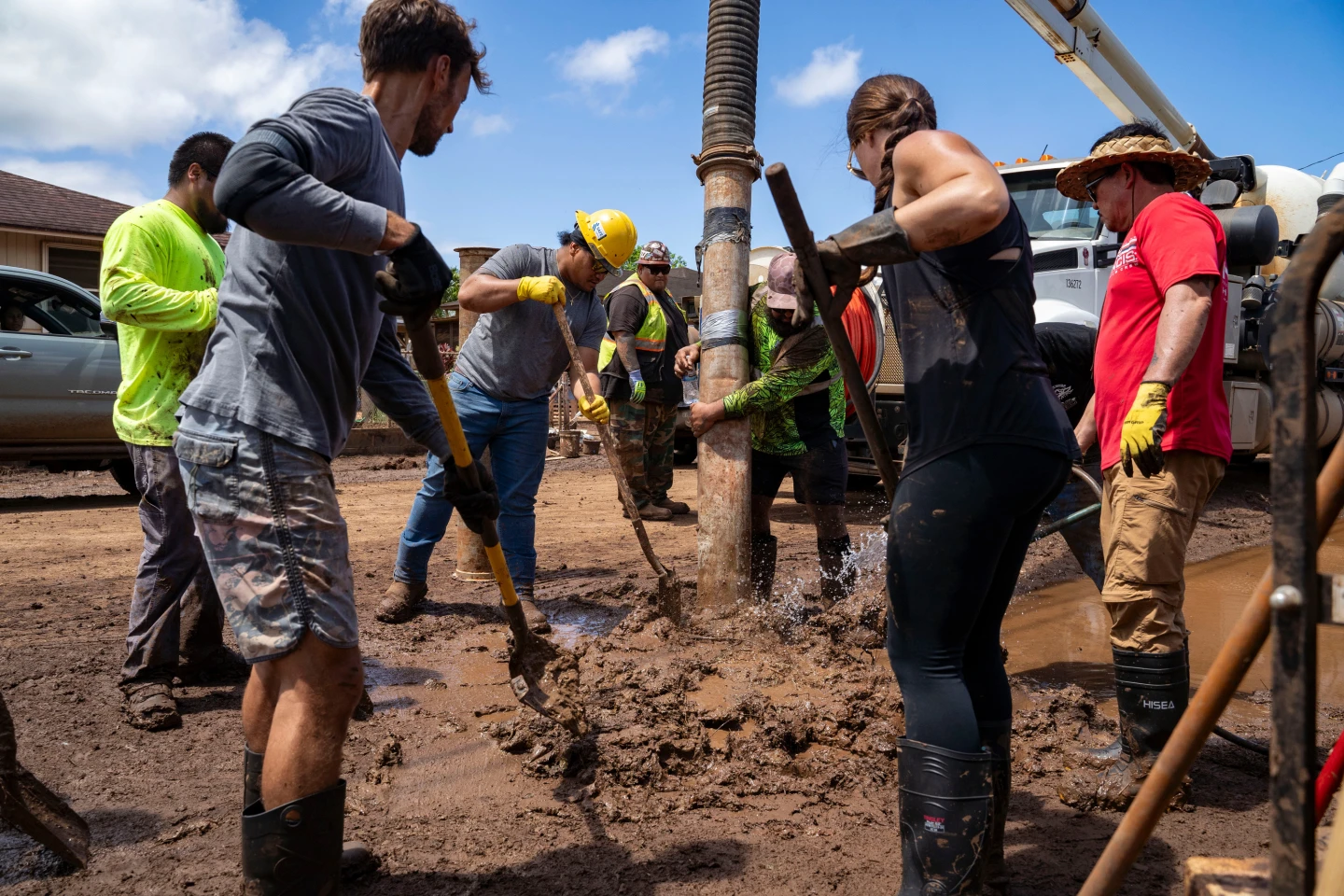
HONOLULU (AP) — Crews on Tuesday began assessing damage from an unexpected downpour that flooded a neighborhood near downtown Honolulu, the latest in a series of extraordinary storms affecting the state.
Residents from Oahu’s North Shore, renowned for big wave surfing, faced the aftermath of what some are calling the worst flooding Hawaii has seen in 20 years. On Monday, torrential rains engulfed the southern parts, rapidly transforming roads in the Manoa Valley into raging torrents, sweeping away cars and inundating homes.
“I was in disbelief at how fast the water poured in,” said local resident Andrew Phomsouvanh, who captured videos showing streets filled with raging rapids. “The water just kept rising.”
Maile Mills, who parked her Honda Civic on the street, watched in despair as floodwaters crested over her vehicle. “It was a surreal sight, like seeing rubber ducks in a pond,” she recalled, referring to cars bobbing amidst the floodwaters.
The National Weather Service expressed their surprise at the storm's intensity attributed to a phenomenon known as 'Kona low' which can hold vast amounts of moisture, leading to sudden heavy rainfalls. Meteorologist Cole Evans admitted that forecasting these systems remains tricky. “It was more than we expected,” he stated.
This flooding event comes after another significant rainstorm a week earlier, which had already left the grounds saturated and more susceptible to flooding. Reports indicate the recent deluge yielded between 2 to 4 inches of rain per hour in certain locations, leading to quick inundations.
Honolulu Mayor Rick Blangiardi described it as a “classic rain bomb,” emphasizing that the day began with clear skies. “No warning was issued before the downpour struck, leaving many residents unprepared and vulnerable,” he stated.
While no fatalities have been reported, damage estimations reach up to $1 billion, targeting infrastructure including airports, roads, and severe impacts on homes. The rapid rise of waters caused hundreds of residents to evacuate, with some escaping on surfboards as they waded through waist-high water.
Volunteers, as well as public workers in Hawaii, are working tirelessly to restore the affected areas. Meanwhile, Governor Josh Green has sought federal assistance, marking this disaster as one of the most serious since 2004.
Hawaii's agriculture sector has also been hit hard, with damages surpassing $17 million. Experts have documented an increase in heavy rainfall frequency and intensity attributed to human-induced climate change, amplifying concerns about future storms in the region.
“We feel like we’re continuously faced with extreme weather events,” local spokesperson Molly Pierce said, highlighting the community’s resilience as they navigate the cleanup process.
The Kona low is expected to move eastward, alleviating immediate threats from heavy rain, but flood watches remain in effect for parts of Maui and the Big Island as assessments continue. Local authorities strive to secure support and restore order amid the growing concern over extreme weather impacts in Hawaii.