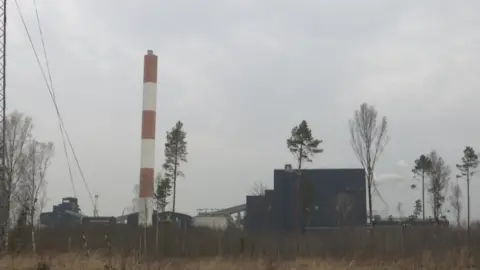
Ukrainian drones entered Estonian and Latvian air spaces from Russia overnight, with one hitting infrastructure and another crashing on land, Tallinn and Riga have said. One of the drones struck the chimney of a power plant in Auvere, Estonia, while another exploded in the southern Kraslava region of Latvia. Thankfully, no major damage or injuries were reported.
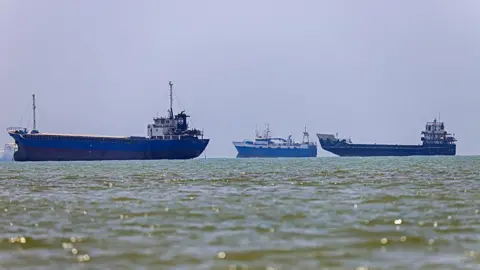
The incident occurred around the same time as Ukraine launched a massive drone attack on the Russian port of Ust-Luga on the Baltic Sea, situated approximately 25km from the Estonian border. Estonian Prime Minister Kristen Michal noted that Ust-Luga was attacked in three waves between 03:00 and 08:00 local time. In response, Baltic air patrols were activated, and residents received notifications warning of a drone threat.
According to Estonia's security police chief, Margo Palloson, the drone that hit the power plant was likely a Ukrainian drone that deviated from its course, possibly due to actions taken in Russian airspace. Latvian Prime Minister Edgars Rinkevics confirmed that the drone that struck Latvia was also Ukrainian. Latvia's Defence Minister Andris Spruds returned home early from a visit to Ukraine following the incidents.
The deputy chief of the Joint Staff, Egils Lescinskis, suggested that the drone likely veered off course or was affected by jamming measures aimed at protecting vital infrastructure. These drones can sometimes miss their targets when their GPS signals are disrupted by such systems.
Lescinskis also acknowledged that no one could feel completely secure while military operations are ongoing in neighboring countries. Palloson warned of possible future incidents, while Michal dismissed the notion of constructing a border wall with Russia as an effective deterrent.
A similar drone incident occurred on Monday night in Lithuania, where a Ukrainian attack drone crashed and exploded near the Belarusian border. Lithuanian authorities confirmed that this drone was also part of operations targeting Russia.
Ust-Luga, being a significant oil export terminal, was heavily targeted, leading to a fire, which was controlled afterward. This attack was part of a larger campaign by Ukraine, which has been launching regular drone assaults on Russian energy sites, targeting various critical infrastructures. The recent escalation saw Ukraine launching almost 400 drones towards multiple Russian regions overnight, while Russia conducted its most extensive attack on Ukraine by firing 948 drones within a 24-hour span.
The incident occurred around the same time as Ukraine launched a massive drone attack on the Russian port of Ust-Luga on the Baltic Sea, situated approximately 25km from the Estonian border. Estonian Prime Minister Kristen Michal noted that Ust-Luga was attacked in three waves between 03:00 and 08:00 local time. In response, Baltic air patrols were activated, and residents received notifications warning of a drone threat.
According to Estonia's security police chief, Margo Palloson, the drone that hit the power plant was likely a Ukrainian drone that deviated from its course, possibly due to actions taken in Russian airspace. Latvian Prime Minister Edgars Rinkevics confirmed that the drone that struck Latvia was also Ukrainian. Latvia's Defence Minister Andris Spruds returned home early from a visit to Ukraine following the incidents.
The deputy chief of the Joint Staff, Egils Lescinskis, suggested that the drone likely veered off course or was affected by jamming measures aimed at protecting vital infrastructure. These drones can sometimes miss their targets when their GPS signals are disrupted by such systems.
Lescinskis also acknowledged that no one could feel completely secure while military operations are ongoing in neighboring countries. Palloson warned of possible future incidents, while Michal dismissed the notion of constructing a border wall with Russia as an effective deterrent.
A similar drone incident occurred on Monday night in Lithuania, where a Ukrainian attack drone crashed and exploded near the Belarusian border. Lithuanian authorities confirmed that this drone was also part of operations targeting Russia.
Ust-Luga, being a significant oil export terminal, was heavily targeted, leading to a fire, which was controlled afterward. This attack was part of a larger campaign by Ukraine, which has been launching regular drone assaults on Russian energy sites, targeting various critical infrastructures. The recent escalation saw Ukraine launching almost 400 drones towards multiple Russian regions overnight, while Russia conducted its most extensive attack on Ukraine by firing 948 drones within a 24-hour span.