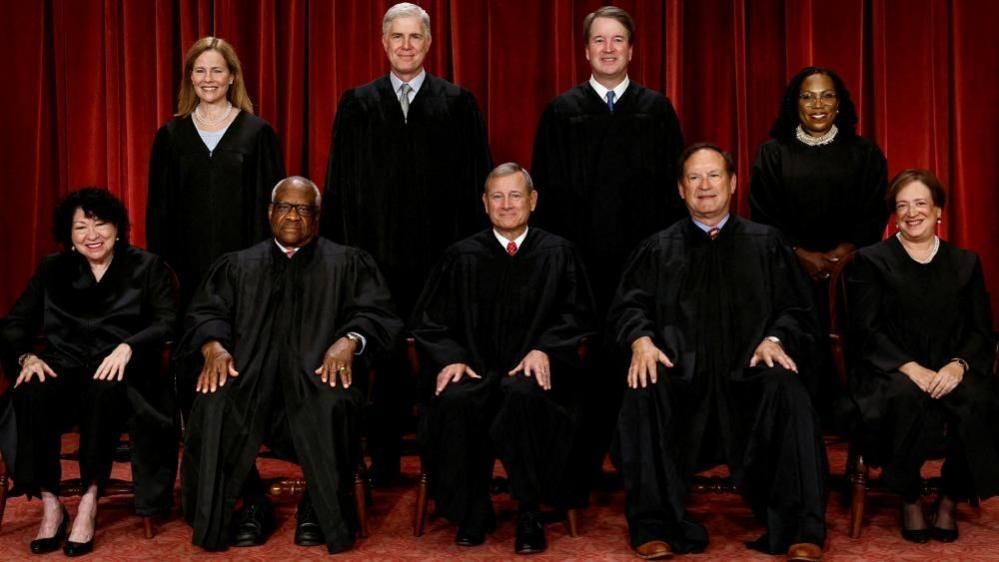
The US Supreme Court dismissed President Donald Trump’s effort to end birthright citizenship, a landmark personality‑rights case that many of his advisers had hoped would limit the rights of children born in the country to temporary or undocumented parents. The decision, handed down by five of the court’s nine justices, kept the principle of jus soli intact and delivered an unmistakable setback to a key pillar of Trump’s immigration agenda.
Trump reacted with measured disappointment, calling the ruling “too bad for our country” while simultaneously pushing forward with legislation that would restore his proposed limits. Yet the chances of that legislation gaining traction appear slim, as a Democratic majority in the Senate would likely block it and the constitutional groundwork remains uncertain.
While birthright citizenship was a high‑profile defeat, the court issued a flock of rulings that expanded executive reach. In February, the conservatives struck down Trump’s tariff plans that were imposed by presidential decree, a move that made it legally harder to impose sweeping trade restrictions without Congress. In a separate case, the court barred the president from deploying National Guard troops to Chicago to enforce immigration law, a rarity for a president seeking to override state objections.
Equally significant were the court’s decisions on elections and campaign finance. Six conservatives upheld the president’s authority to remove independent regulatory officials, granting the administration greater control over key agencies. The court also loosened restrictions on campaign contributions and allowed larger party spending on candidates, which may tilt the scales in upcoming midterm elections in favor of the Republican base.
Other rulings further cemented the court’s conservative stance: it denied the counting of certain mail‑in ballots and reduced the eligibility of refugees for political asylum, and it invalidated sections of the Voting Rights Act that protected minority representation. These decisions collectively erode protections that were meant to balance power across the political spectrum.
At a time when senior justices may be approaching retirement, the Supreme Court’s conservative dominance—and, by extension, Trump’s influence over it—remains a defining feature of American politics. The intersection of executive ambition and judicial conservatism continues to shape policies that reverberate across the nation.