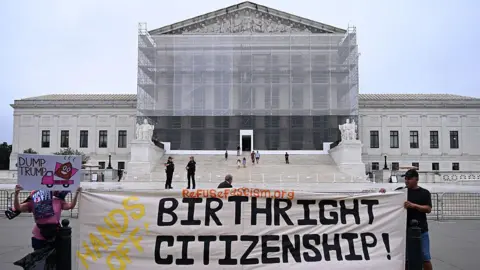
WASHINGTON (AP) — The U.S. Supreme Court has decided to take on the controversial issue of birthright citizenship as it reviews President Donald Trump’s executive order, which stipulates that children born to parents who are in the United States illegally are not American citizens.
The court will hear Trump's appeal against a lower-court ruling that deemed the citizenship restrictions unconstitutional. Although the order has not been enforced, its implications could drastically impact over a century of legal precedent established by the 14th Amendment, which guarantees citizenship to anyone born on U.S. soil, with few exceptions.
The case is slated for arguments in the spring, with a decision anticipated by early summer. This marks a crucial moment for Trump’s immigration agenda within his broader policy framework aimed at tightening immigration enforcement.
Challenges have mounted against the administration's approach, including actions that have sparked litigation from various groups and states. Recently, the Supreme Court prevented the rapid deportation of certain individuals under the Alien Enemies Act while allowing broader immigration stops to continue.
Each lower court that has examined Trump's order has concluded it likely violates the 14th Amendment—designed to secure citizenship, particularly for freed slaves and their descendants, leading to a significant legal battle over the future of immigration law in the United States.
The Trump administration argues that noncitizen children do not fall under the jurisdiction of the U.S. and hence are not entitled to citizenship. This narrative has drawn backing from numerous Republican-led states and lawmakers who support a reinterpretation of the birthright citizenship clause.