The ants are flying in Kenya at the moment. During this rainy season, swarms can be seen leaving the thousands of anthills in and around Gilgil, a quiet agricultural town in Kenya's Rift Valley that has emerged as the centre of a booming illegal trade. The mating ritual sees winged males leave the nest to impregnate queens, who also take flight at this time. This makes it the perfect time to chase down queen ants to sell on to smugglers who are at the heart of a growing global black market, that taps into the pet craze for keeping ants in transparent enclosures designed to observe the insects as they busily build a colony.
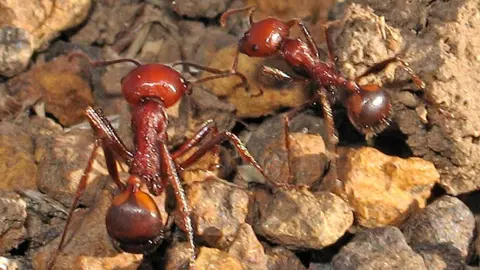
It is the giant African harvester ant queens, which are large and coloured red, that are most prized by international ant collectors – one can fetch up to £170 ($220) on the black market, which tends to operate online. A single fertilised queen is able to create a whole colony and can live for decades – and can be easily posted as scanners do not tend to detect organic material.
At first, I did not even know it was illegal, a man, who asked not to be named, told the BBC about how he had once acted as a broker, linking foreign buyers with local collection networks. Also known as Messor cephalote, these ants are native to East Africa and known for their distinctive seed-gathering behaviour making them popular with ant collectors.
You look for the mounds near open fields, usually early morning before the heat. The foreigners never came to the fields themselves - they would wait in town, in a guest house or a car, and we would bring the ants to them packed in small tubes or syringes they supplied us with.
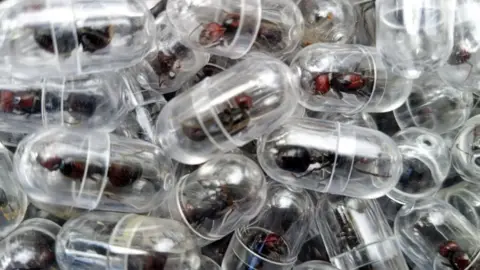
The scale of the illicit trade in Kenya became apparent last year when 5,000 giant harvester ant queens - mainly collected around Gilgil - were found alive at a guest house in Naivasha, a nearby lakeside town popular with tourists.
The suspects - from Belgium, Vietnam and Kenya - had packed the test tubes and syringes with moist cotton wool, which would enable each ant to survive for two months, according to the Kenya Wildlife Service (KWS). The plan was to take them to Europe and Asia and put them up for sale.
This trade in ants has caught scientists and the authorities by surprise. The East African nation is more accustomed to high-profile wildlife crimes involving elephant tusks and rhino horns. UK-based retailer Ants R Us describes the giant African harvester ant as 'many people's dream species' - though the queens are currently out of stock, with the site explaining that it is very hard for retailers to source them.
However, he can understand the fascination with East Africa's harvester, with colonies created by a 'foundress queen', who can grow up to 25mm (0.98 inches) and who produces eggs throughout her life.
During the swarming, the queens mate with several males, then that is it for the males - their job is done, according to the entomologist who explains how the queen then scurries away to dig a small burrow and begin laying eggs to start her empire.
Her workers and soldier ants, those that protect the nest, are all female and will eventually number in the hundreds of thousands. Nests can live for over 50 years, perhaps even up to 70 years. The environmental consequences are also a concern in Kenya, as unsustainable harvesting - particularly the removal of queen ants - can lead to colony collapse, disrupting ecosystems and threatening biodiversity.
Some conservationists are now calling for greater trade protections for all ant species under the Convention on International Trade in Endangered Species (Cites), the global wildlife trade treaty. The reality is that no ant species is currently listed under Cites, meaning the scale of the trade remains largely invisible to policymakers and the global community.
With careful monitoring in place, it could be that future farmers around Gilgil will have special formicaria on their land expanding the yields from their fields and orchards - full of vegetables and fruits - to include lucrative queen ants. But the debate over the dangers of exporting ants to hobby collectors in different parts of the world is yet to be settled.
It is the giant African harvester ant queens, which are large and coloured red, that are most prized by international ant collectors – one can fetch up to £170 ($220) on the black market, which tends to operate online. A single fertilised queen is able to create a whole colony and can live for decades – and can be easily posted as scanners do not tend to detect organic material.
At first, I did not even know it was illegal, a man, who asked not to be named, told the BBC about how he had once acted as a broker, linking foreign buyers with local collection networks. Also known as Messor cephalote, these ants are native to East Africa and known for their distinctive seed-gathering behaviour making them popular with ant collectors.
You look for the mounds near open fields, usually early morning before the heat. The foreigners never came to the fields themselves - they would wait in town, in a guest house or a car, and we would bring the ants to them packed in small tubes or syringes they supplied us with.
The scale of the illicit trade in Kenya became apparent last year when 5,000 giant harvester ant queens - mainly collected around Gilgil - were found alive at a guest house in Naivasha, a nearby lakeside town popular with tourists.
The suspects - from Belgium, Vietnam and Kenya - had packed the test tubes and syringes with moist cotton wool, which would enable each ant to survive for two months, according to the Kenya Wildlife Service (KWS). The plan was to take them to Europe and Asia and put them up for sale.
This trade in ants has caught scientists and the authorities by surprise. The East African nation is more accustomed to high-profile wildlife crimes involving elephant tusks and rhino horns. UK-based retailer Ants R Us describes the giant African harvester ant as 'many people's dream species' - though the queens are currently out of stock, with the site explaining that it is very hard for retailers to source them.
However, he can understand the fascination with East Africa's harvester, with colonies created by a 'foundress queen', who can grow up to 25mm (0.98 inches) and who produces eggs throughout her life.
During the swarming, the queens mate with several males, then that is it for the males - their job is done, according to the entomologist who explains how the queen then scurries away to dig a small burrow and begin laying eggs to start her empire.
Her workers and soldier ants, those that protect the nest, are all female and will eventually number in the hundreds of thousands. Nests can live for over 50 years, perhaps even up to 70 years. The environmental consequences are also a concern in Kenya, as unsustainable harvesting - particularly the removal of queen ants - can lead to colony collapse, disrupting ecosystems and threatening biodiversity.
Some conservationists are now calling for greater trade protections for all ant species under the Convention on International Trade in Endangered Species (Cites), the global wildlife trade treaty. The reality is that no ant species is currently listed under Cites, meaning the scale of the trade remains largely invisible to policymakers and the global community.
With careful monitoring in place, it could be that future farmers around Gilgil will have special formicaria on their land expanding the yields from their fields and orchards - full of vegetables and fruits - to include lucrative queen ants. But the debate over the dangers of exporting ants to hobby collectors in different parts of the world is yet to be settled.