In recent years, the U.S. has seen an explosion in the weight-loss drug market, with companies fiercely vying for dominance. The market, spurred by rising obesity rates, has shifted the landscape of pharmaceutical sales.
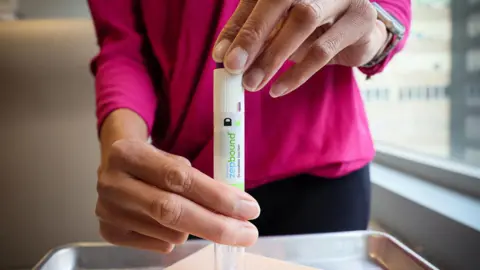
Take, for example, Ruth Gonzalez, a 56-year-old self-employed individual. After substantial financial sacrifices, she now spends around $350 monthly on the weight-loss drug Zepbound. Gonzalez's efforts have produced notable results, including a 40-pound weight loss and improved health metrics.
Gonzalez’s journey reflects a larger trend, as Eli Lilly, the maker of Zepbound, recently reduced prices by $50-$100, paving the way for more accessible weight-loss solutions. Despite these reductions, the costs remain high compared to many global markets.
The competition among pharmaceutical companies has synthesized into public strategies, with firms engaging in direct-to-consumer sales and negotiating prices directly with customers, bypassing traditional insurance routes that have often been unwilling to cover these weight-loss medications.
In turn, this has led to significant price drops: Wegovy, initially over $1,600 monthly, is now available for $149, while Zepbound has dropped to $299 from its original $1,000 launch price.
Yet, the financial burden continues for many consumers. Shekinah Samayah-Thomas, a 62-year-old patient, now struggles to afford her prescription due to insurance changes, illustrating continuing access issues despite reduced prices.
Experts argue that while direct-to-consumer models may provide temporary relief, systemic healthcare reforms are needed to ensure comprehensive coverage for weight-loss treatments. Activists are advocating for increased insurance coverage, signaling that market competition alone might not suffice in addressing the widespread obesity crisis in the U.S.