This article contains distressing details and references to suicide. Some of the names have been changed to protect identities.
Kateryna cannot talk about her son, Orest, without tears. Her voice trembles with anger as she explains how she found out the news that he had died on the front line in the eastern Donetsk region of Ukraine in 2023.
According to the official investigation by the army, he died by a 'self-inflicted wound', something Katernya finds hard to believe.
Orest was a quiet 25-year-old who loved books and dreamed of an academic career. His poor eyesight had made him initially unfit for service at the start of the war, his mother says. But in 2023, a recruitment patrol stopped him in the street. His eyesight was re-evaluated and he was deemed fit to fight. Not long after, he was sent to the front as a communications specialist.
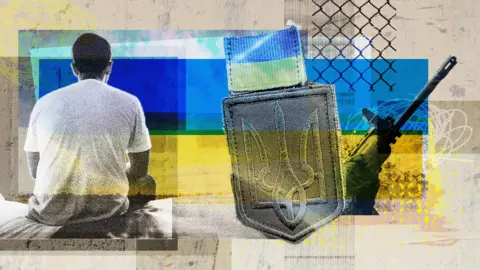
While Ukraine collectively mourns the loss of more than 45,000 soldiers who have died since Russia's full-scale invasion in 2022, a quieter tragedy unfolds in the shadows. There are no official statistics surrounding suicide among soldiers. Officials describe them as isolated incidents. Yet human rights advocates and bereaved families believe they may be in the hundreds.
Once deployed near Chasiv Yar in Donetsk, Orest became increasingly withdrawn and depressed, Kateryna recalls. She still writes letters to her son every day - 650 and counting - her grief made worse by how Ukraine classifies suicide as a non-combat loss. Families of those who take their own lives receive no compensation, no military honors and no public recognition.
'The state took my son, sent him to war, and brought me back a body in a bag. That's it. No help, no truth, nothing.' - says Kateryna.
For Mariyana in Kyiv, the situation is no different. Her husband Anatoliy volunteered to fight in 2022 and was deployed near Bakhmut, one of the bloodiest battles of the war. After losing part of his arm, he took his own life in the hospital yard. Because Anatoliy died by suicide, officials denied him a military burial. 'When he stood on the front line, he was useful. But now he's not a hero?' - she questions.
The stigma surrounding suicide in the military context has left many families isolated and without support. Oksana Borkun runs a community for military widows, comprising about 200 families bereaved by suicide. She stresses that too often, suicides are dismissed as isolated incidents while the reality on the ground is much different.
Olha Reshetylova, Ukraine’s Commissioner for Veterans' Rights, highlights that families deserve the truth and advocates for systemic reform to address these tragic outcomes more compassionately and thoroughly. 'They've seen hell. Even the strongest minds can break,' she explains.
These narratives uncover the urgent need for recognition and accountability surrounding the mental health implications of war, pushing society to confront the stigma and consequences of suicide among soldiers in Ukraine.