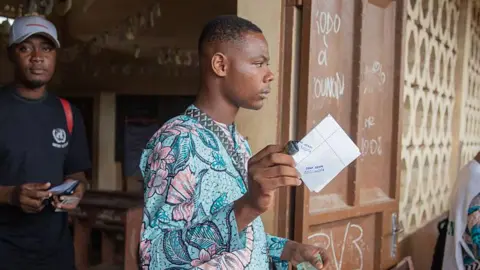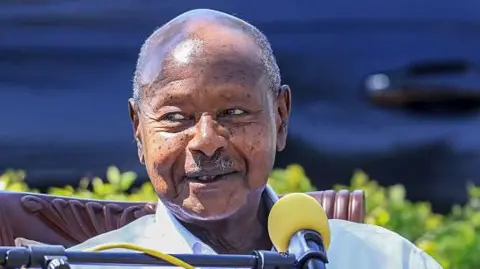
In the recent presidential election in Uganda, President Yoweri Museveni has emerged with a significant lead, garnering 75% of the votes according to the electoral commission. However, the electoral process has been overshadowed by violent clashes, resulting in the deaths of several opposition supporters. The opposition leader, Bobi Wine, lags significantly behind with 21% of the votes, and has faced restrictions on movement, as security forces encircle his residence in Kampala, effectively placing him under house arrest.
At least seven opposition supporters were reported killed in Butambala, about 55 kilometers south-west of Kampala, during clashes with police. Opposition MP Muwanga Kivumbi claims that the police and soldiers responded violently, using tear gas and live ammunition on a crowd gathering for early election results at his home.
Reports indicate that an internet blackout imposed prior to the elections has hampered communication and facilitated a delay in news emergence from the conflict zones. Security forces have been accused of harboring an aggressive stance against opposition supporters during the campaign period, which observers and human rights organizations have condemned as repressive.
As Uganda awaits the final announcement of election results, the atmosphere remains tense. The electoral chief expressed that counting would proceed unaffected by the blackout, but accusations of fraud and manipulation abound, particularly from the opposition. Museveni, who has ruled since 1986, asserts himself as the reliable leader amidst a youth-fueled change in the political landscape represented by Wine, who pledges reform and anti-corruption measures.
The final election results are expected to be announced soon, amidst deep concerns about potential civil unrest in response to the electoral outcome.
}