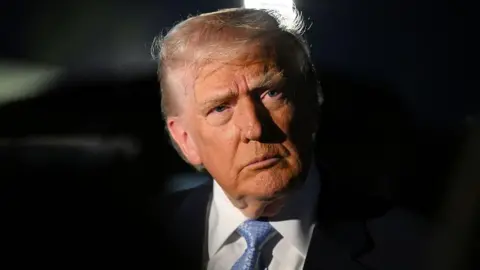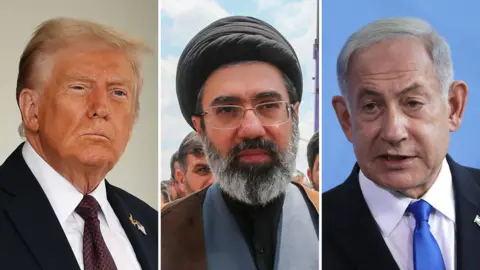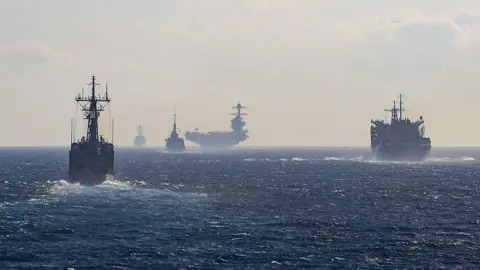
In the third week of the joint US-Israeli war against Iran, Donald Trump faces decisions that could define the rest of his presidency.
But if the American commander-in-chief is grappling with a war of choice that seems in danger of spiralling in ways he can't control, those concerns are not playing out in public.
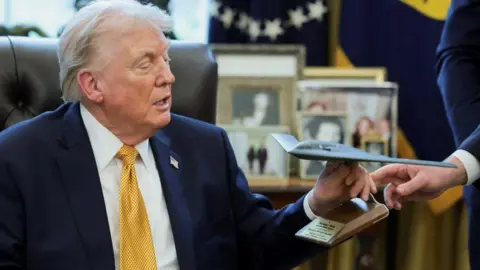
In more than an hour of public remarks at the White House, he discussed his thinking on the state of the war effort as well as unrelated topics.
While Trump may be interested in other topics, he is confronting a lesson previous American presidents have learned: war can consume a presidency whether they want it to or not.
And evidence continues to mount that a war that Trump had previously said was already won now has a timeline that could stretch for weeks or longer.
On Monday, Trump announced that the US had requested that a planned presidential trip to China be delayed because of the war.
The president's concerns were echoed by White House Press Secretary Karoline Leavitt, who emphasized the importance of ensuring the success of Operation Epic Fury.
Over the weekend, the president posted on social media regarding the formation of a coalition to protect shipping in the Strait of Hormuz, amid threats from Iranian forces.
However, many nations, including Japan and Australia, have expressed reluctance to assist, digging deeper into the complexities Trump faces as he weighs an increased US military presence in the region.
The US is also reportedly prepared to deploy additional troops to the area, risking heightened tensions with Iran while also countering increased oil prices domestically.
Amid all this, Trump's approval ratings remain unstable, particularly if the war starts to sharply affect the economy and everyday costs for Americans.
Ultimately, Trump's choices present risks with no quick resolution in sight, thus complicating an already tense geopolitical landscape.