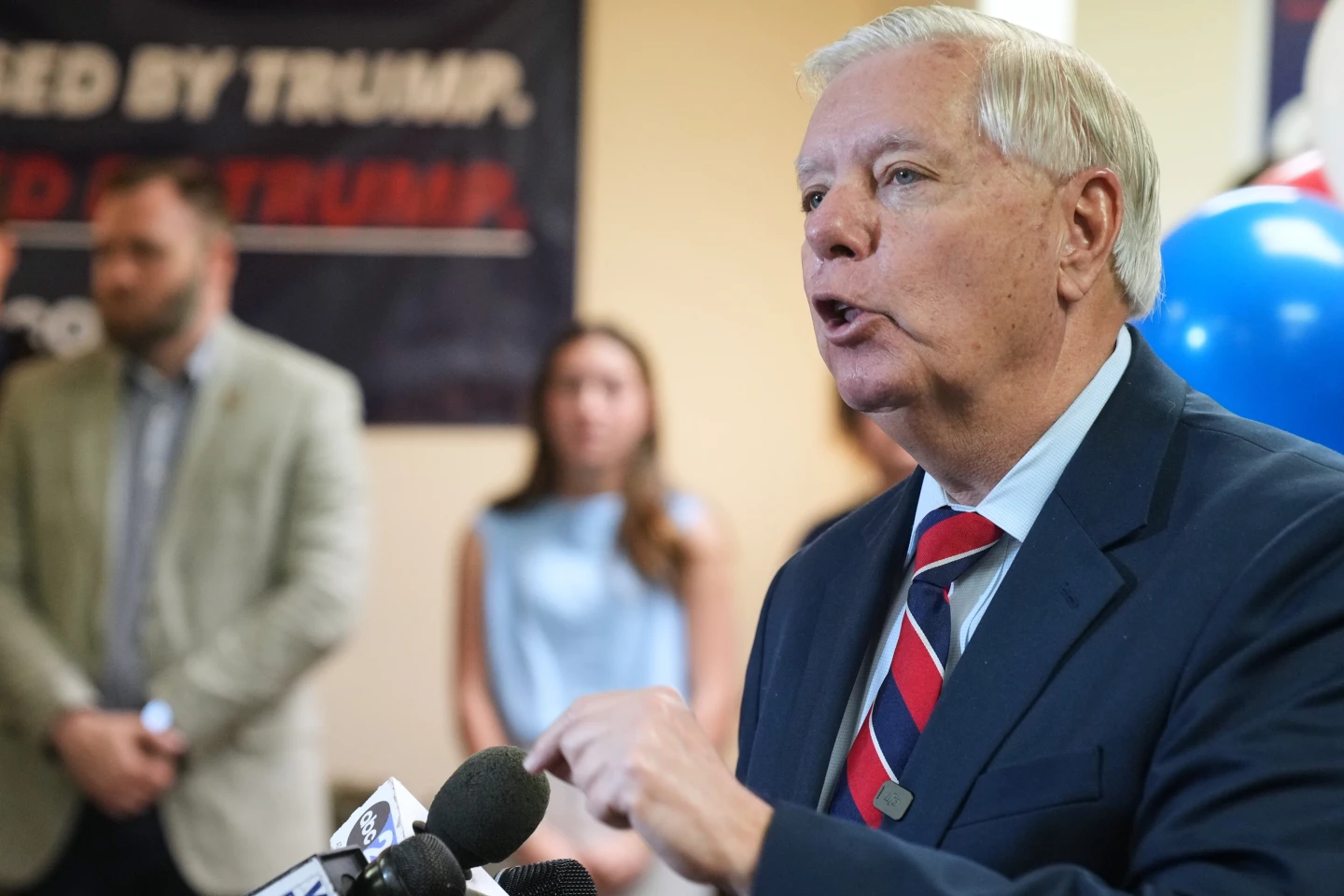
COLUMBIA, S.C. (AP) — Over three decades after entering Washington, Senator Lindsey Graham stands at a pivotal moment as he seeks a fifth term amidst escalating tensions in the Middle East. With President Trump’s backing and a war in Iran unfolding, Graham's future in politics and the Republican Party hangs precariously on the balance of public opinion and upcoming elections.
Despite significant public discontent regarding the conflict with Iran, Graham remains unwavering in his support for aggressive U.S. tactics against Tehran. Speaking to his supporters, he confidently stated, “We’re crushing them,” signaling his commitment to a hardline approach. This is not a new stance for Graham, who has long advocated for confronting Iran, dismissing bipartisan criticisms as he champions military strength and readiness.
“If the radical cleric in Iran had a nuclear weapon, he would use it just as certainly as Hitler were to use it,” Graham warned, expressing his belief in the necessity of military readiness. His long career has been marked by consistent advocacy for isolationist policies targeting Iran, a view that aligns with his recent calls for increased military engagement.
As Graham ramps up his campaign in South Carolina, which he has historically dominated, many are skeptical about the potential impacts of the ongoing conflict on midterm elections. Analysts suggest Graham’s rhetoric, although popular among certain Republican factions, could alienate moderate voters concerned about military interventions.
“You’re seeing essentially a child on Christmas morning who has gotten everything that he’s ever dreamed of,” noted Jon Hoffman from the Cato Institute, highlighting Graham's ambitions that may serve his agenda more than the interests of the nation.
Notably, Graham’s closeness to Trump, despite the rift over foreign policy differences, shows how their mutual interests may drive the Republican Party’s narrative heading into critical elections. With conservative values often taking center stage during election cycles, Graham is poised to leverage his military advocacy to underscore his credentials as a staunch conservative.
While Graham’s campaign strategy typically involves rallying conservative support, the rising tensions with Iran could complicate matters. Critics within the party express frustration over his persistent advocacy for military conflict, questioning the implications of such strategies on both national security and electoral outcomes.
As the November midterms approach, Graham's legacy as a leading hawk on Iran and his influence on U.S. foreign policy may be more crucial than ever, potentially reshaping the Republican party’s stance and direction on military engagements.