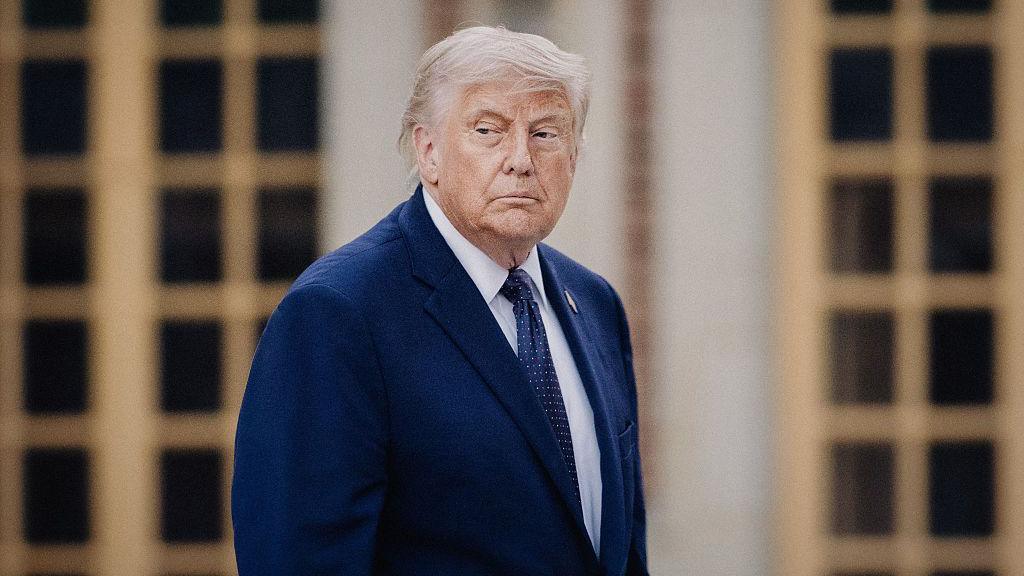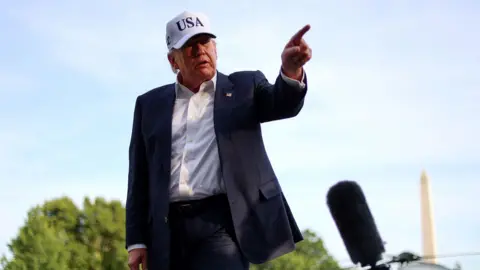
Hours after meeting Chinese President Xi Jinping in Beijing last week, Donald Trump issued a stern warning to Taiwan against pursuing independence.
I'm not looking to have somebody go independent. And, you know, we're supposed to travel 9,500 miles to fight a war. I'm not looking for that. I want them to cool down. I want China to cool down, he told Fox News in an interview that aired on Friday.
Trump's comments - some of the strongest a US president has made so far on the issue - immediately sparked a flurry of responses from Taiwan saying it does not see the need to formally declare independence.
Taiwanese independence is the reddest of red lines for Beijing, which claims Taiwan as its own and has accused its president Lai Ching-te of being a separatist.
But the issue is a lot more nuanced.
Why does China want Taiwan?
China's desire to reunify with Taiwan is a long and historical one. It dates back to the end of the Chinese civil war in 1949, when the Chinese Communist Party won control of China, and the losing Kuomintang forces retreated to Taiwan, setting up their own government.
Beijing has since claimed the self-governed island. But after Xi came to power, the Chinese government has doubled down on its threats and sought ways to stamp out what it sees as separatism. Taiwan's reunification with China has become a key goal - Xi himself has called it an unstoppable reality.
In recent years, China has stepped up various forms of pressure, including military drills, the diplomatic isolation of Taiwan, and military maneuvers around Taiwanese waters and airspace.
During last week's summit, Xi told Trump that the issue of Taiwan was the most important one in US-China relations, and that mishandling it could lead to conflict.
As the US is Taiwan's closest ally, observers have long worried that any attack on Taiwan would draw the US into direct conflict with China.
China has made clear its stance in its Anti-Secession Law, which asserts the desire for peaceful reunification but also allows for military action if Taiwan were to officially declare independence.
Does Taiwan want independence?
Taiwan has close economic and cultural ties with China. However, most people in Taiwan see themselves as politically distinct from China, which has become increasingly authoritarian. Most Taiwanese prefer to maintain the status quo, avoiding both formal declarations of independence and unification with China.
The official position of the Taiwanese government under the Democratic Progressive Party (DPP), which has ruled since 2016, reflects this view. President Lai insists that since Taiwan considers itself an independent country, there is no need for a formal declaration.
Despite this, the Taiwanese government can only formally declare independence if a constitutional amendment is passed by the Legislative Yuan and supported by a majority in a referendum.
Beijing remains wary of the DPP, viewing it as a pro-independence party, especially given President Lai's previous critical comments regarding China.
Does the US support Taiwan independence?
While Trump's warning to Taiwan has attracted attention, no US government has ever clearly stated that Taiwan should be independent.
In 1979, the US severed formal ties with Taiwan to establish relations with Beijing, recognizing the latter's claim of being the sole Chinese government. However, the US also enacted the Taiwan Relations Act, permitting arms sales to Taiwan and ensuring US commitment to maintaining peace in the region.
Trump's comments signal potential shifts in US policy, with analysts noting his visible sympathy towards Xi’s stance empowering Beijing to increase pressure on Taiwan.
Regardless, Trump stressed the US position on Taiwan remains unchanged, expressing interest in direct talks with President Lai, which would likely challenge Beijing's position.
The unfolding relationship between the US, China, and Taiwan continues to be a focus of global attention as observers anticipate future developments and potential shifts in diplomatic policy.