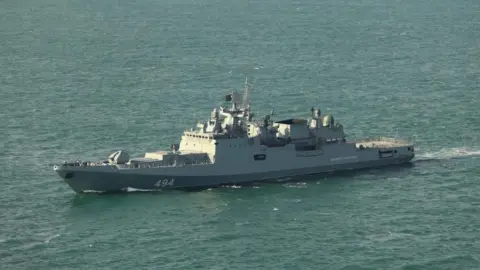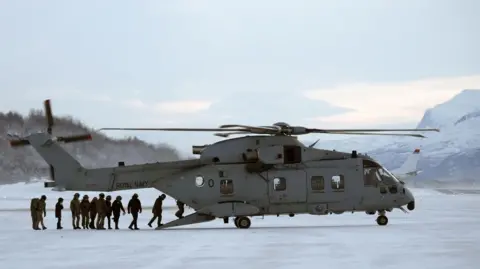
The number of British troops in Norway will double over the next three years as part of efforts to combat Russian threats in the High North.
Defence Secretary John Healey stated that the number of armed forces personnel stationed in the Arctic nation will rise from around 1,000 to 2,000.
This commitment follows increasing concern among NATO allies about Russia's activities in the Arctic, including the reopening of old Cold War bases and a growing military presence in the region.
Healey noted, Demands on defence are rising and Russia poses the greatest threat to Arctic and High North security that we have seen since the Cold War.
The Defence Secretary is expected to meet with NATO counterparts in Brussels to discuss these proposals.
The Arctic Sentry, proposed by Foreign Secretary Yvette Cooper, aims to bolster surveillance and security in the region, modeled after existing NATO alliances such as the Baltic Sentry and the Eastern Sentry.
As part of the expanded presence, 1,500 Royal Marine Commandos will participate in NATO's Exercise Cold Response in March, designed to train allied forces in extreme Arctic conditions across Norway, Finland, and Sweden.
In September, the UK-led Joint Expeditionary Force will conduct an exercise named Lion Protector, focusing on training armed forces to defend critical infrastructure from potential attacks and sabotage across Norway, Iceland, and the Danish Straits.
Concerns have grown among UK and NATO allies regarding the risks posed by Moscow to underwater cables and pipelines, with heightened tensions following the invasion of Ukraine.
A 30% rise in Russian submarines in UK waters has been noted in the past two years, with Russian submarine activity in the North Atlantic now reported to be at levels reminiscent of the Cold War.
}