In brief
On 8 September 2026, the UK government announced a sweeping sanctions regime against Israel’s illegal settlements in the occupied West Bank, describing the actions of settlers as “ethnic cleansing.” The measures target the sale of goods, services and promotion of the settlements, and were coordinated with France and Canada. Israel’s Foreign Minister Gideon Saar condemned the move as a lie, warned of hostile action from the UK and closed the British consulate in East Jerusalem. The sanctions extend to Hezbollah’s financing wing and Iran, reflecting a broader shift toward a hard‑line stance on the two‑state solution.
UK imposes sanctions on Israeli settlements in occupied West Bank, calling the actions “ethnic cleansing”.
Premier legislation announced on 8 September 2026 was headed by Foreign Secretary Ed Miliband, who said the sanctions marked a new approach aimed at stopping Israel’s illegal settlements and the settlement‑related violence that has intensified in recent months.
The package bans the manufacture and sale of goods for settlement use, targets companies that provide services to settlements, and criminalises the advertising of illegal settlement projects in the UK. It was launched with France and Canada in a joint statement that the measures “take a further turn in our approach to protecting the two‑state solution”.
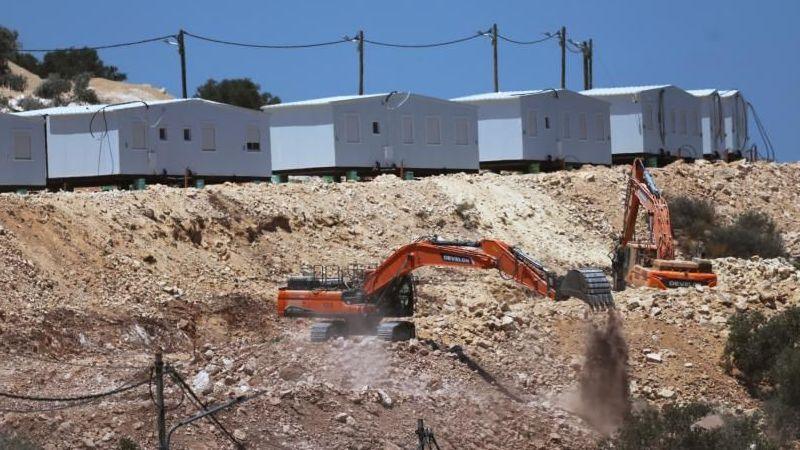
Image of Israeli bulldozers near a new settlement in the West Bank
Israel’s Foreign Minister Gideon Saar immediately called the UK’s action an “outrageous lie” and announced retaliatory measures, including the closure of the British consulate in East Jerusalem and a ban on 11 UK MPs, among them Jeremy Corbyn and several Green Party members.
Over the next six to nine months the UK will implement a comprehensive sanctions regime that, according to Miliband, will target the illegal settlements and expansion, not the Israeli government itself. The sanctions also extend to Hezbollah’s financing arm and Iran, aligning with concurrent US and EU actions.
Miliband’s speech in the House of Commons framed the move as a response to the “centuries of persecution” faced by Jews and the need to protect Israeli security while condemning what he described as war crimes in Gaza. He added that “international humanitarian law” demands that civilian nuclear supplies not be targeted, highlighting the need for global legal processes.
Reactions on the ground have been divided. The Board of Deputies of British Jews voiced regret, calling the sanctions symbols of “political flag‑bearing”. The UK’s Chief Rabbi, Sir Ephraim Mirvis, warned that the move could embolden anti‑Jewish rhetoric. Israeli President Isaac Herzog described the sanctions as “falling on the wrong side of history”.
The Palestinian Authority welcomed the UK’s decision, labeling it a “significant step toward confronting Israel’s colonial system”. Meanwhile, the U.S. State Department and former US ambassadors issued cautious statements, calling the sanctions a “highly significant” but uncertain move.
With the West Bank’s ongoing conflict and the simmering tensions in East Jerusalem, the sanctions regime reflects a sharp shift in British foreign policy. Whether it will influence the broader two‑state settlement prospect remains to be seen, but the UK's actions have already sparked a flurry of diplomatic and political responses across the region and beyond.