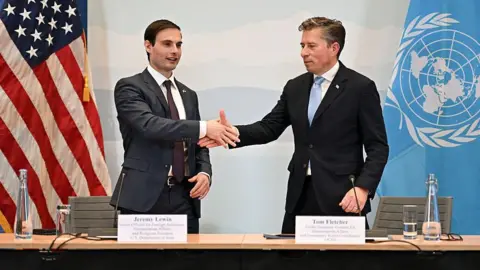
The United States has pledged $2 billion (£1.5bn) to fund United Nations (UN) humanitarian programmes, but has warned the UN it must adapt or die.
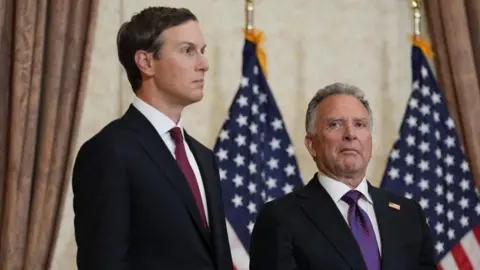
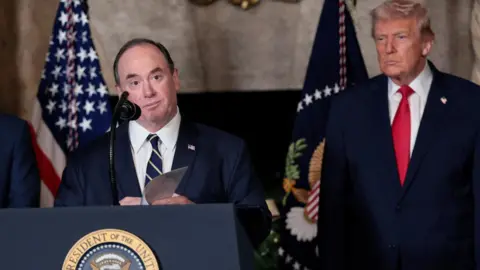
The announcement was made in Geneva by Jeremy Lewin, President Trump's Under Secretary for Foreign Assistance, and the UN's emergency relief chief, Tom Fletcher.
It comes amid huge cuts in US funding for humanitarian operations and further cuts expected from other donors, such as the UK and Germany.
Mr Fletcher welcomed the new funds, saying they would save millions of lives. However, $2 billion is just a fraction of what the US has traditionally spent on aid; in 2022, its contribution to the UN's humanitarian work was estimated at $17 billion (£12.6bn).
The funding comes with conditions. The US contribution prioritizes just 17 countries, including Haiti, Syria, and Sudan, notably excluding Afghanistan and Yemen. Mr Lewin cited concerns over the diversion of UN funds to the Taliban in Afghanistan, affirming that President Trump will never tolerate a penny of taxpayers' money going to terrorist groups.
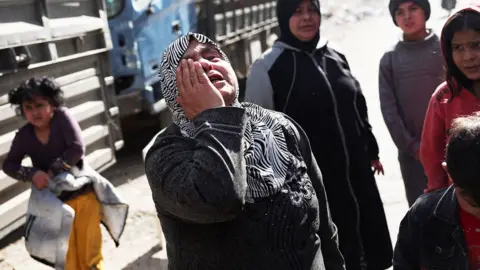
These restrictions complicate the efforts of aid agencies responding in unfavorably affected areas. Funding cuts have already resulted in the closure of vital clinics in Afghanistan and reduced food supplies for displaced persons in Sudan, with global child mortality rates expected to rise this year after a period of decline.
The US stipulations also prevent funds from being allocated to climate change-related projects, which Mr Lewin argued do not qualify as life-saving measures.
Mr Lewin, a Trump loyalist, stressed that the US piggy bank is not open to those organisations that just want to return to the old system. Instead, they advocate for focused and efficient aid efforts that avoid redundancy among projects. This is a sentiment echoed by Mr Fletcher and the wider UN system, emphasizing the importance of judicious spending in crisis management.
Yet, concerns loom regarding whether such conditions are overly politicized, challenging the UN's core principles of neutrality and impartiality. Excluding specific nations or pressing issues like climate change poses significant ethical dilemmas in humanitarian aid distribution.
Despite these challenges, the UN is appreciative of the $2 billion pledge, recognizing that during a funding crisis in Washington, any financial support is better than none.
}