In brief
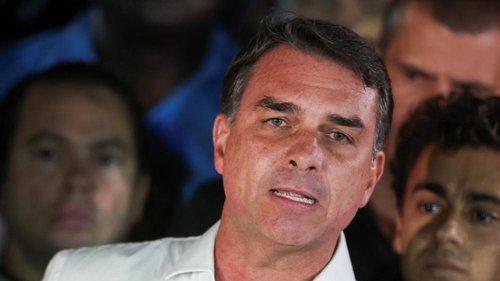
After losing the presidential contest to Luiz Inácio Lula da Silva, Flavio Bolsonaro departed Brazil in defiance of a Supreme Court order prohibiting his exit. His arrival in Miami has prompted U.S. authorities to issue visas, raising questions around judicial authority and international accountability.
Flavio Bolsonaro, the Brazilian presidential candidate for the ruling Patriota party, landed in Miami, Florida, on Wednesday morning after losing the November 10 election to incumbent Luiz Inácio Lula da Silva. His arrival took place despite a Supreme Federal Court order that barred him from leaving the country, and U.S. officials announced that visas would be issued to him and his family.
Xinhua reported that Bolsonaro’s defeat was confirmed by the official tally, with Lula receiving 51.79 % of the valid votes compared with 48.21 % for Bolsonaro. The slim margin reflected a fiercely contested campaign that drew intense scrutiny from voters, political analysts, and international observers.
In a separate legal action, Supreme Federal Court Justice Alexandre de Moraes had ordered Bolsonaro to surrender his passports to the Federal Police and prohibited him from exiting the country. The court’s ruling aimed to ensure that the candidate fulfilled obligations related to the suspended trial for alleged campaign finance violations.
Despite the court order, Bolsonaro’s team announced that the candidate would depart Brazil, traveling in a private aircraft from Argentina with a stopover in Ecuador before arriving in the United States. Brazilian media confirmed that Bolsonaro and his family were on the flight, and NBC News reported that the plane landed in Miami after a multi‑country journey.
Upon arrival, Bolsonaro cleared U.S. customs in Miami with his family, according to BBC Live coverage that followed the event. The U.S. Department of State announced that it would issue visas to the former candidate and his relatives, enabling them to enter the United States, as stated by a senior State Department official.
The decision by the U.S. to grant visas, while Brazil’s judiciary had placed a travel ban on Bolsonaro, underscores the differing civic stakes between domestic legal accountability and international diplomatic practice. Brazil’s judiciary’s authority to enforce travel restrictions is a key element of its rule‑of‑law framework, and Bolsonaro’s departure challenges the enforcement of that authority.
For Brazilian citizens, the situation raises concerns about the political process’s integrity. The court’s refusal to allow a key political figure to leave the country was seen by Lula supporters as a safeguard against potential misconduct, while Bolsonaro’s supporters view the order as politically motivated retaliation for punitive investigations.
Internationally, the incident highlights the U.S.’s role in adjudicating visa matters for foreign political figures. U.S. officials’ willingness to issue visas, despite Brazilian court orders, may influence diplomatic relations and signal a different standard of accountability that could affect future interactions between the two governments.
As Bolsonaro and his family settle into Miami, the legal dispute remains unresolved. The Brazilian Supreme Court has yet to decide whether their travel ban will be upheld or overturned, and the outcome will carry implications for Brazil’s institutional credibility, election security, and the enforcement of judicial decisions.
Overall, Bolsonaro’s arrival in Miami illustrates the complex intersection of electoral outcomes, judicial authority, and international mobility. While the U.S. has taken a pragmatic approach to visa issuance, the Brazilian judiciary’s challenge to the candidate’s departure points to ongoing tensions over transparency, accountability, and the rule of law in the country’s democratic institutions.