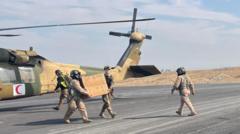
The aid was unloaded from the helicopters at an airstrip in Israeli-held southern Gaza, marking a pivotal moment in the ongoing humanitarian efforts in the region. The BBC, which accompanied the mission, reported that the helicopters landed at a small strip surrounded by razor wire, capable of accommodating only two Blackhawk helicopters at a time. The Jordanians remained at the airstrip as the supplies, which included aid from Britain, were unloaded under the watchful eyes of World Food Programme representatives.
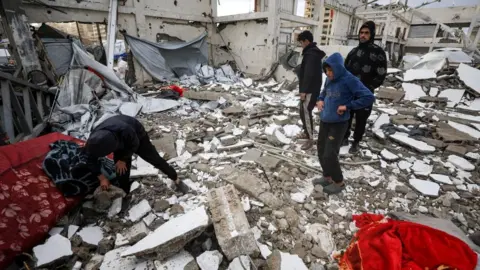
As the helicopters descended through the midday haze, a stark contrast emerged against the grey ruins that littered the landscape. Once on the ground, Jordanian air force personnel were quick to ensure that the necessary parties were present to receive the aid. Two trucks stood ready, poised to transport the essentials to the nearby city of Khan Younis.
The urgency of the mission was palpable, with 16 Jordanian helicopters deployed for the operation and 14 more waiting to follow. Unceremoniously, the aid was quickly offloaded amidst the whirring rotors of the aircraft, reflecting the pressing need for medical supplies, baby formula, and other critical items that could spoil if not delivered swiftly.
Jordan's official spokesman, Dr. Mohammad al-Momani, expressed deep concern for the humanitarian crisis, describing conditions in Gaza as "horrific... and inhumane." He asserted that Jordan was joining the international community in efforts to alleviate the suffering in the war-torn area.
This significant delivery marks not only a humanitarian effort but also a message of hope in a landscape marred by prolonged conflict, as the world watches the ongoing needs of the people of Gaza during a time of severe hardship. The situation underscores the urgency for international cooperation in addressing the desperate circumstances facing millions in the region.
As the helicopters descended through the midday haze, a stark contrast emerged against the grey ruins that littered the landscape. Once on the ground, Jordanian air force personnel were quick to ensure that the necessary parties were present to receive the aid. Two trucks stood ready, poised to transport the essentials to the nearby city of Khan Younis.
The urgency of the mission was palpable, with 16 Jordanian helicopters deployed for the operation and 14 more waiting to follow. Unceremoniously, the aid was quickly offloaded amidst the whirring rotors of the aircraft, reflecting the pressing need for medical supplies, baby formula, and other critical items that could spoil if not delivered swiftly.
Jordan's official spokesman, Dr. Mohammad al-Momani, expressed deep concern for the humanitarian crisis, describing conditions in Gaza as "horrific... and inhumane." He asserted that Jordan was joining the international community in efforts to alleviate the suffering in the war-torn area.
This significant delivery marks not only a humanitarian effort but also a message of hope in a landscape marred by prolonged conflict, as the world watches the ongoing needs of the people of Gaza during a time of severe hardship. The situation underscores the urgency for international cooperation in addressing the desperate circumstances facing millions in the region.