In brief
At a G20 foreign ministers’ meeting in Atlanta, Hakan Fidan urged Russia and Ukraine to reach a peace agreement involving major concessions. He highlighted how the war’s spill‑over—closing the Strait of Hormuz and disrupting Black Sea grain trade—has damaged the global economy and threatened wider conflict. The Turkish official emphasized Turkey’s role as a mediator seeking a durable settlement that also requires renewed ties between Russia and Europe.
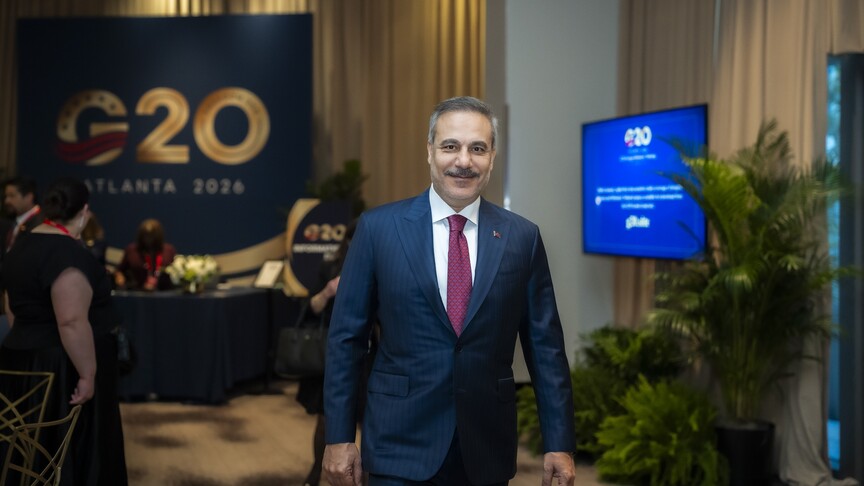
During a summit of foreign ministers in Atlanta, U.S., Turkey’s Hakan Fidan urged Russia and Ukraine to make “significant sacrifices” in order to end a conflict that has spanned almost five years. He warned that the war’s cumulative damage to the global economy and the threat of regional escalation could trigger a larger regional war.
Speaking to Anadolu Agency and the Turkish public broadcaster TRT on the sidelines of the G20 meeting, Fidan said the war’s “economic and social costs…have become increasingly difficult to ignore, particularly for European countries.” He stressed that the conflict is “no longer sustainable” and called on both sides to reach an agreement that entails large concessions.
These wars are no longer sustainable. Therefore, Russia and Ukraine must reach an agreement,
The foreign minister added that a lasting settlement would require not only a cease‑fire between Russia and Ukraine but also a constructive relationship between Russia and Europe. He noted that any peace agreement “will not be limited to those two countries alone” and that Europe needs to reconcile with Russia and restart certain aspects of their relationship.
A constructive relationship between Europe and Russia needs to be redefined in the aftermath of peace. This is important,
Fidan emphasized that the closure of the Strait of Hormuz has compounded the economic impact of the Ukraine war, further disrupting energy supplies and international trade. He highlighted how European industries had benefited from inexpensive Russian energy, which supported manufacturing, exports and related financial activities. The break in these economic links has produced far‑reaching consequences and, he said, the mounting cost must be brought to an end.
Food security, in particular, is an incredibly problematic issue. It needs to be brought to a halt as soon as possible.
The Turkish minister also expressed concern over disruptions to commercial shipping in the Black Sea, noting that Russian and Ukrainian grain and energy supplies struggle to reach international markets. He said Turkey is “continuing intensive diplomatic contacts and making substantial efforts to facilitate the transportation of grain from the Black Sea.”
These remarks come amid Turkey’s long‑standing role as a mediator between Russia and Ukraine, balancing ties with both sides while playing an active diplomatic role in regional security. The foreign minister’s warning underscores the broader civic stakes: the health of global supply chains, the stability of European economies, and the possibility of a wider regional conflict that could reshape international relations and the enforcement of international law.
In sum, Fidan’s message to the world is that the war’s geopolitical and economic fallout is unsustainable. The call for a peace deal that includes significant sacrifices from both sides is a plea for responsibility on the political institutions responsible for protecting civilians, ensuring food security, and maintaining a stable, rule‑based international order.