Bulgaria - the poorest country in the European Union - has become the 21st member of the eurozone, leapfrogging more prosperous candidates such as Poland, the Czech Republic and Hungary.
For the young, entrepreneurial urban population in Bulgaria, this transition is seen as a promising and financially beneficial leap, aligning the nation more deeply with the European mainstream—following its NATO and EU memberships and its Schengen aspirations.
Yet, for the older and more conservative rural communities, the switch from the Bulgarian lev to the euro evokes anxiety and resentment.
The lev, which translates to 'lion,' has served as Bulgaria's currency since 1881 but has been pegged to European currencies since 1997, initially to the Deutschmark and then to the euro.
Public opinion is largely split regarding the euro adoption, with political instability complicating the transition. The coalition government led by Prime Minister Rosen Zhelyazkov recently lost a confidence vote, exacerbated by mass protests triggered by controversial budget plans. Bulgarians have faced seven elections in four years, with an eighth anticipated early next year.
Todor, a 50-year-old business owner from Gabrovo, expressed skepticism about the euro's introduction, stating, If there were a referendum, I reckon 70% of the people would vote against it. In contrast, some business owners, like Ognian Enev, a tea shop proprietor, view the euro as a neutral change that could benefit trade, highlighting the existing familiarity with euro prices among those involved in international commerce.
Throughout January, payments can be made in both lev and euros, although from February, transactions will solely be in the euro. To address fears of price inflation, special measures have been enacted, including price monitoring systems.
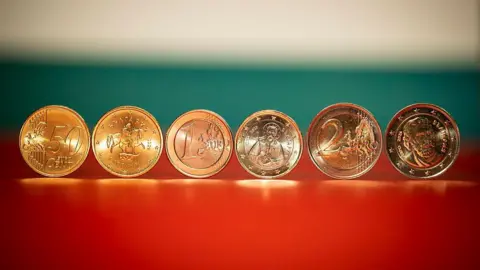
New euro coins incorporate Bulgarian cultural symbols to allay concerns over national sovereignty—coins display figures like St. Ivan of Rila and the Madara Rider, reflecting Bulgaria's historical identity.
As Bulgaria navigates the implications of euro adoption, the potential outcomes may echo either the successful transitions of Baltic nations or the stagnation seen in Italy, leading experts like Enev to express caution about the future.
}