Japan heads to the polls again on Sunday for its second general election in as many years. The snap vote has caught the ruling party, the opposition and much of the electorate off guard.
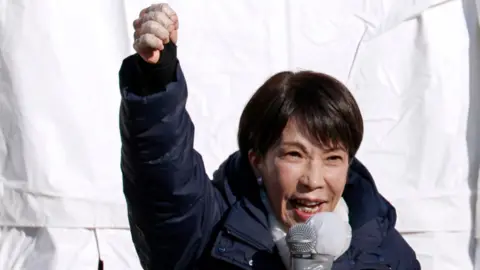
\Sanae Takaichi, Japan's first female prime minister, is betting on her personal popularity, hoping to succeed where her party failed just last year: delivering a clear public mandate for the long-ruling but deeply unpopular Liberal Democratic Party (LDP).
\It is a political gamble - one her predecessor, Shigeru Ishiba, made, and lost badly. Voters will now decide whether it will pay off.
\The difference this time is that her approval across most media polls has been much, much higher than her predecessors, says Rintaro Nishimura, an analyst and senior associate at The Asia Group's Japan Practice.
\Conventional wisdom says: when approval is high, you call an election.
\Since taking office last October, Sanae Takaichi has dominated headlines, not through policy or legislation, but through political performance. The work, work, work mantra in her acceptance speech reinforced the image of an energised, relentless leader.
\In just over three months, she has cultivated a highly visible public profile. She's taken high-profile visits from world leaders, including receiving Donald Trump only a week into her premiership.
\When they appeared aboard the USS George Washington in Yokosuka, the prime minister raised her fists in the air as President Trump lavished her with praise.
\And just two days before February's vote, President Trump endorsed Takaichi saying she has already proven to be a strong, powerful, and wise leader... one that truly loves her country.
\There was also her surprise appearance playing the song Golden from the film K-Pop Demon Hunters on the drums alongside South Korea's president, and the selfie with Italy's prime minister. These were all viral moments projecting confidence and momentum, and distanced her from the traditionally stagnant and at times boring image of her predecessors.
\There is an atmosphere of positivity about her being the first female prime minister in Japanese history, about her being successful at diplomacy… with her having approval ratings in the 60s or sometimes as high as 70%, says Jeffrey Hall, lecturer at Kanda University of International Studies.
\However, the timing of the election has drawn criticism from opposition parties. They argue the snap vote has delayed anti-inflation measures and postponed debate over the fiscal 2026 budget. The ruling party's previous failings, including involvement in financial scandals, linger as Takaichi attempts to move the party back towards traditional conservative values while confronting rising living costs and public skepticism.
\The stresses of the economy and continuous inflation remain key concerns that could overshadow any early electoral success, leaving Takaichi’s position precarious despite recent popularity.
"