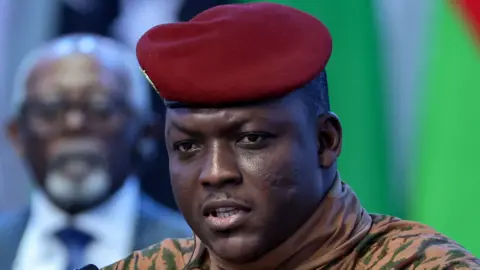
In a stark declaration aired on state television, Capt. Ibrahim Traoré, the military ruler of Burkina Faso, has asserted that democracy 'kills' and insisted that the citizens abandon this governance model. Since seizing power three years ago, Traoré has proposed an alternative approach tailored for Burkina Faso, though he has not elaborated on what this would entail.
Initially, he had promised to restore democratic governance by July 2024; however, the junta has since decided to prolong its rule for another five years. Additionally, authorities have enacted a ban on all political parties, which Traoré described as 'divisive and dangerous.' He urged citizens to look at Libya's tumultuous history as a cautionary tale of what happens when democracy is pursued without consideration for local contexts.
Traoré presented his vision for a new system rooted in sovereignty and revolutionary ideals, sidelining traditional democratic frameworks. His government has faced accusations of suppressing dissent, yet he maintains that his administration has garnered significant support across the continent, particularly for its critique of Western interventionism.
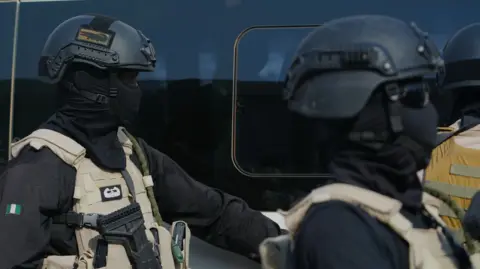
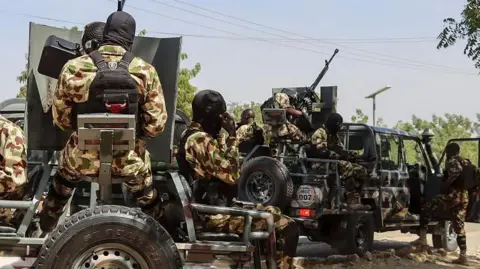
As violence from Islamist militants persists in the region, Burkina Faso's leadership has shifted focus away from cooperation with Western allies and toward seeking military assistance from Russia. The nation's stability remains uncertain, especially given reports of civilian casualties amid ongoing conflicts attributed in part to military actions.
Initially, he had promised to restore democratic governance by July 2024; however, the junta has since decided to prolong its rule for another five years. Additionally, authorities have enacted a ban on all political parties, which Traoré described as 'divisive and dangerous.' He urged citizens to look at Libya's tumultuous history as a cautionary tale of what happens when democracy is pursued without consideration for local contexts.
Traoré presented his vision for a new system rooted in sovereignty and revolutionary ideals, sidelining traditional democratic frameworks. His government has faced accusations of suppressing dissent, yet he maintains that his administration has garnered significant support across the continent, particularly for its critique of Western interventionism.
As violence from Islamist militants persists in the region, Burkina Faso's leadership has shifted focus away from cooperation with Western allies and toward seeking military assistance from Russia. The nation's stability remains uncertain, especially given reports of civilian casualties amid ongoing conflicts attributed in part to military actions.