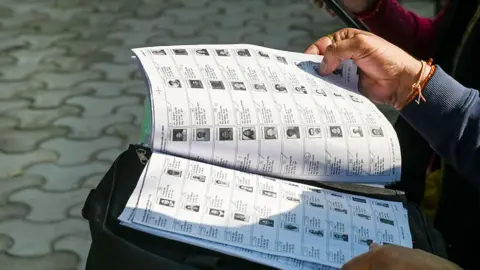
Muhammad Daud Ali, a former Indian army technician, recently discovered that he was no longer a voter in his home state of West Bengal. His name - and those of his three children - had been struck off the electoral rolls despite valid documents, including his passport and service records. Only his wife remained on the list.
Ali, 65, and his children are among nine million voters - about 12% of West Bengal's 76 million electorate - who have been removed from the 2026 rolls as part of the Special Intensive Revision (SIR) exercise. Voting to elect a new state government will take place later this month in this eastern Indian state.
Of these nine million, more than six million names were struck off as absentee or deceased voters, while the fate of another 2.7 million - including families like Ali's - remains undecided and will be determined by tribunals. Thirteen states and federally-administered territories have undergone the SIR process so far, but West Bengal is the only one where it was followed by an additional layer of special adjudication.
India's Election Commission claims the revision process is designed to eliminate outdated entries and add genuine voters. However, this initiative has incited controversy and faced legal challenges ever since it was first implemented in Bihar last year.
The situation has heightened tensions in West Bengal, where the ruling Trinamool Congress party (TMC) is at odds with the electoral body. Chief Election Commissioner Gyanesh Kumar has asserted that the revision aims for a pure electoral roll without excluded eligible voters or included ineligible persons.
The debate has also been fueled by remarks from political leaders, including Prime Minister Narendra Modi, suggesting the cleanup targets illegal Bangladeshi infiltrators - a term the TMC alleges is used to malign Muslims. Interestingly, many Hindu voters have also found themselves excluded from the rolls.
West Bengal shares a porous and partly riverine 4,096km (2,545-mile) border with Bangladesh, adding a politically charged dimension to discussions about migration and voter registration in the state, particularly as it is home to India's second-largest Muslim population.
The mass deletions have raised alarm about electoral errors and exclusion risks, drawing attention from political commentators who underscore the importance of voting rights as a fundamental tenet of democracy. With elections approaching and a significant number of voters still in limbo, the state faces a critical juncture that could redefine its political landscape.