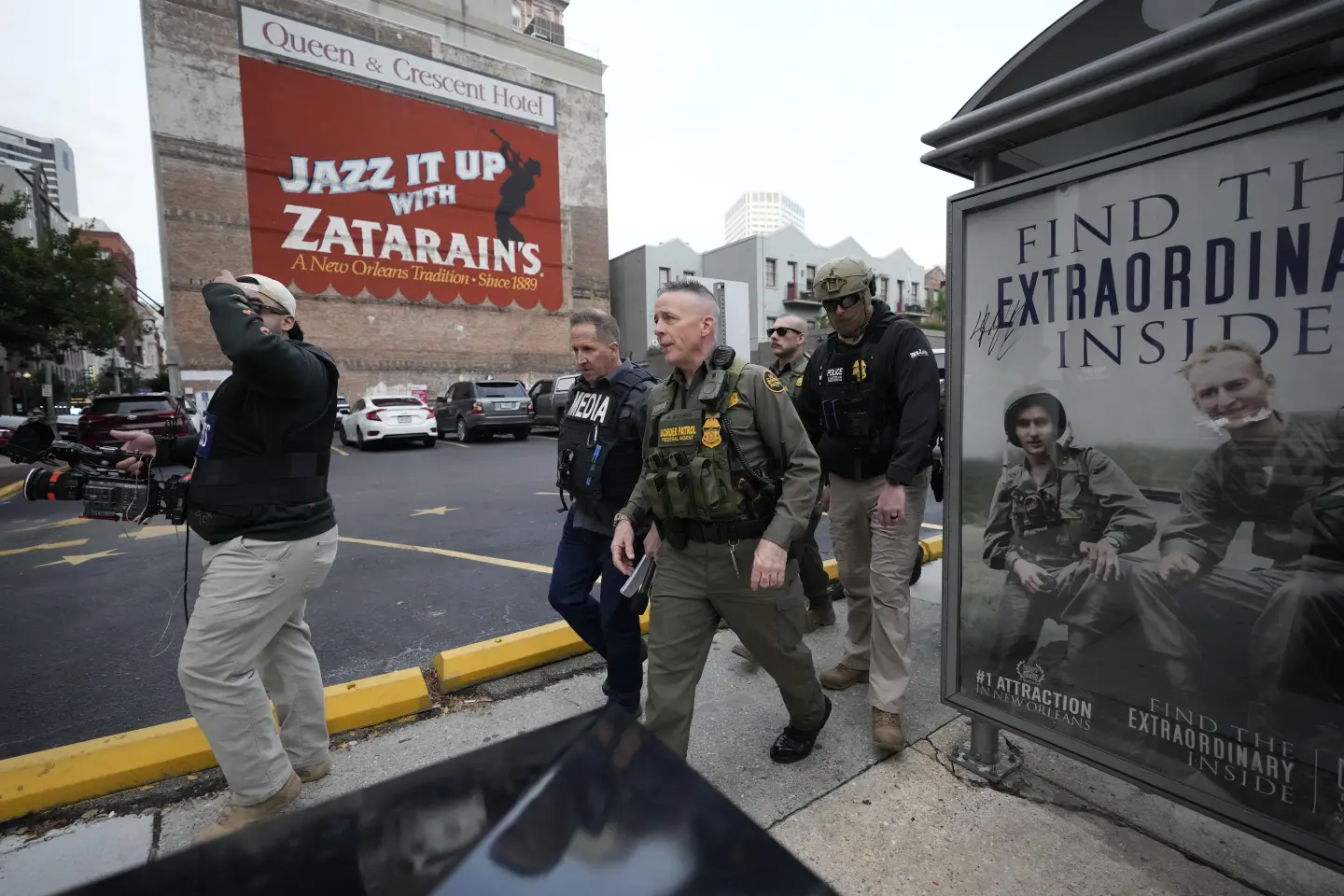
NEW ORLEANS (AP) — The Trump administration's immigration crackdown launched this week in New Orleans sets an ambitious target of 5,000 arrests, focused on violent offenders. However, local officials deem this goal unrealistic given the city's demographic landscape.
Statistics indicate that the New Orleans metropolitan area has a foreign-born population of nearly 100,000. In contrast, larger cities like Chicago, which also saw law enforcement sweeps, had a considerably greater immigrant population and support to achieve such numbers.
New Orleans City Council President J.P. Morrell stated, There is no rational basis that a sweep of New Orleans would yield anywhere near 5,000 criminals, let alone those defined as 'violent.' He emphasized that crime rates in the city are at historic lows, and the suggestion that illegal immigrants substantially contribute to violent crime is unfounded.
Community Outcry and Arrest Operations
Federal agents have begun deploying throughout New Orleans, making arrests in various neighborhoods, particularly those housing large immigrant populations. Alejandra Vasquez, who tracks federal agent activity via social media, reported a surge of messages from concerned citizens regarding arrests that include hard-working individuals rather than criminals.
Critics of the crackdown argue that the operation targets innocent people, with local officials stating that many, including mothers and teenagers, are being detained during regular check-ins. Councilmember Lesli Harris remarked, What we’re seeing instead are mothers, teenagers, and workers being detained during routine check-ins, from their homes and places of work.
Political Support and Defiance
Support from state Republicans, including U.S. House Speaker Mike Johnson, reinforces the crackdown's justification as a response to perceived dangers posed by 'sanctuary city' policies. At the same time, approximately two dozen protesters were forcibly removed during a City Council meeting, reflecting the growing tension surrounding the operation.
The crackdown's objectives extend beyond violent criminals, raising concerns that a broader group will be targeted. Historical data from previous immigration enforcement campaigns, such as Chicago's, reveal that the vast majority of arrests often do not involve violent offenders.
As the operation unfolds, local entities continue to express their alarm, emphasizing the potential destabilization of families and the community's fabric that may result from such aggressive measures.