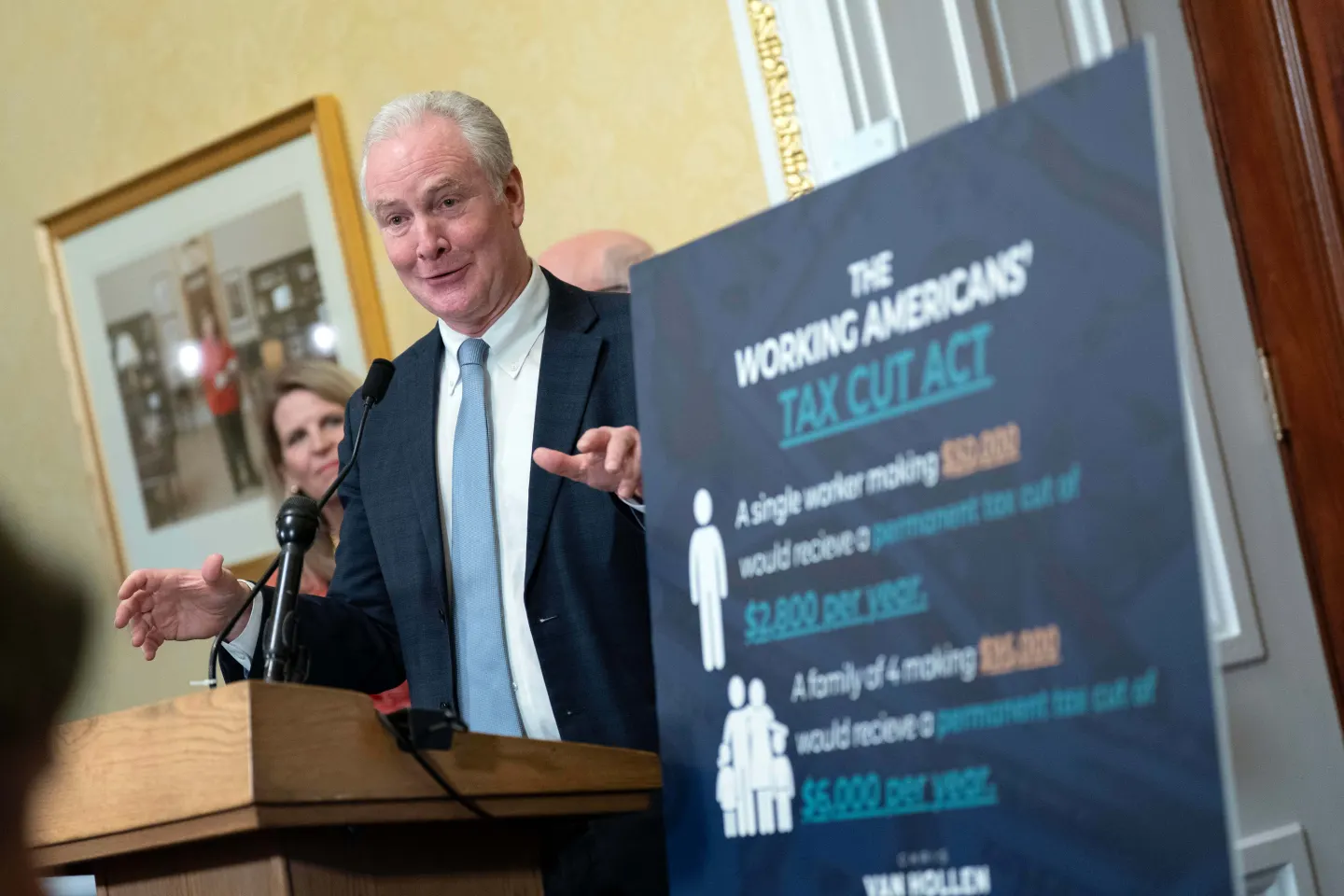
In response to ongoing voter concerns about affordability, some Democrats are adopting tax cuts as a strategy previously associated with Republicans. Leading this initiative are Senator Chris Van Hollen of Maryland and Senator Cory Booker from New Jersey, both advocating for substantial reductions in the federal income tax for lower-income groups. Van Hollen's proposal seeks to eliminate federal income tax for individuals earning $46,000 or less, while Booker suggests that households earning up to $75,000 should be exempt from income tax.
This shift indicates a strategic effort by Democrats to reshape their public perception by echoing tax-cutting tactics that contributed to the electoral success of Republicans, particularly during the Trump administration. However, the implications of these tax cuts raise critical questions about the potential detriment to other Democratic priorities, including healthcare funding and the reversal of previous tax cuts benefiting the wealthy.
The remarks from Booker emphasize a commitment to responding to what he describes as the voters' desire for bold and ambitious changes. He asserts that these proposals signify a new era in Democratic policymaking that addresses the immediate financial burdens that many Americans face.
Tax cut proposals are not limited to federal races; they are also gaining traction in state elections. Keisha Lance Bottoms, a candidate for governor in Georgia, plans to exempt public school teachers from state income taxes, while Representative Katie Porter of California supports eliminating state income taxes for families earning under $100,000. Porter criticized the complexity of past tax initiatives and advocates for a direct approach that voters can understand and appreciate.
Reactions and Implications
Critics of the new tax policies express concern that the benefits may disproportionately advantage higher-income earners, undermining the intended support for lower-income families. Analysts have pointed out that many of these proposals would result in minor tax reductions for working-class individuals and more generous savings for affluent taxpayers.
Despite these criticisms, some Democratic leaders believe that these tax cuts serve as a necessary compromise that will resonate with voters who feel increasingly squeezed by financial pressures. Furthermore, the proposals come as Democrats seek to improve their standing with a more affluent electorate, aiming to maintain support in urban areas where income levels have risen.
Senator Van Hollen's proposal has attracted bipartisan interest, gaining support from 19 Democratic senators as well as independents who caucus with the party. The push for tax relief is also backed by labor organizations like the AFL-CIO, reflecting a broader impact of these discussions on the Democratic platform leading into future elections.
As Democrats progress into the 2024 elections, the effectiveness and public support for these tax strategies will likely shape discussions on fiscal policy and the party's overall approach to addressing economic inequality.