
In brief
Georgia is on the verge of implementing a bill that mandates weapon detection systems in public schools, making it potentially the first state in the U.S. to do so. In the wake of a tragic school shooting that resulted in four deaths, advocates argue that these measures are crucial for student safety. Nevertheless, the effectiveness of such technologies remains in question, and concerns about funding, privacy, and the actual need for detection systems in elementary schools arise. Prospective costs and the challenge of balancing security with educational environments also feature prominently in the ongoing debate.
ATLANTA (AP) — Georgia is poised to take a groundbreaking step by becoming the first state to enforce mandatory weapon checks for all students arriving at public schools daily.
A bill is advancing that aims to implement weapons detection systems in response to the tragic school shooting in 2024 that left four students dead.
“That rifle would have never reached our hallways,” stated Daria Lezczynska, a junior at Apalachee High School, the site of the shooting. “Lives would have been saved. Families would not be grieving.”
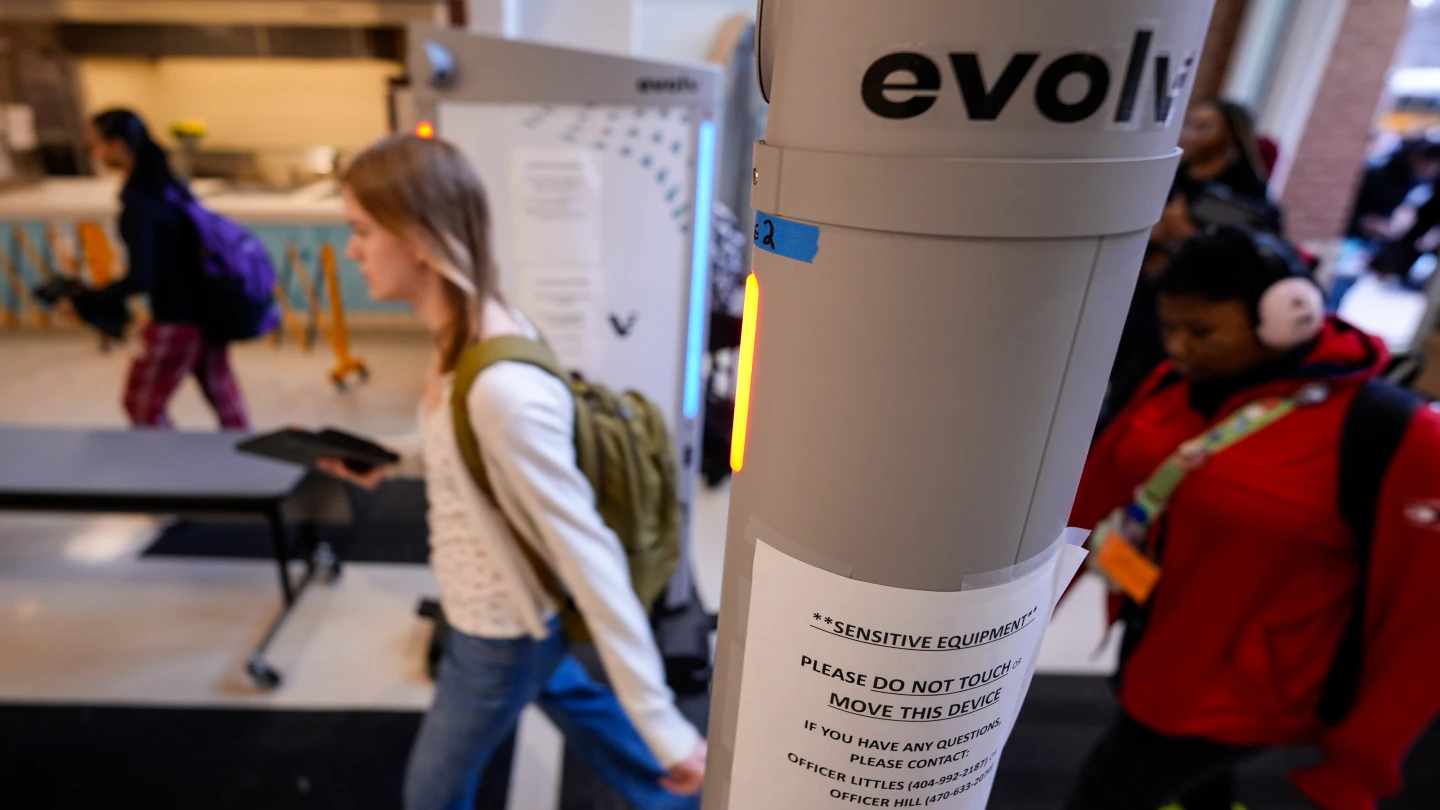
While some schools have long relied on technology such as metal detectors or mandated clear backpacks, an innovative generation of detection systems is gaining traction, combining computer analysis and electromagnetic field technology to effectively identify various weapons, including guns and knives.
“It’s common for me to walk through a weapons detection system at the courthouse,” remarked Chuck Efstration, the bill's sponsor. “Georgia’s students deserve similar security.”
Despite support for the bill, concerns loom large regarding the implications of widespread surveillance. Questions arise surrounding the financial burden, as systems can cost upwards of $10,000 each, and who will shoulder the cost is a significant concern.
Many participants in the educational system emphasize that rigorous studies confirming the effectiveness of these detectors in preventing school shootings are scant, stirring a debate about whether such measures might inadvertently normalize the presence of guns in schools.
The proposed bill passed a key committee vote recently, and will now move to final considerations in both Georgia’s House and Senate before proceeding to Governor Brian Kemp for approval or veto.
A concerning trend noted is that while weapon detection systems may reduce gun incidents, reliance on technology could lead to complacency among staff, with numerous false alarms potentially dulling vigilance.
Furthermore, some state representatives express that the focus should shift away from detection measures toward more stringent gun control to mitigate children's exposure to firearms.
As these discussions unfold, the future of Georgia’s public school safety protocols remain at a pivotal juncture.
