WASHINGTON (AP) — The funding lapse for the Department of Homeland Security will likely stretch into next week as the House contemplates passing a Senate plan it had previously rejected to fund the bulk of the agency, but not its immigration enforcement operations.
There was no resolution Thursday to the standoff, now in its 48th day, after both chambers met for just a few minutes in pro forma sessions. Nonetheless, the Republican leadership and President Trump have coalesced around a plan to fully fund DHS as part of a two-step process. The agreement puts the congressional leaders on the same page for ending the impasse after they had pursued separate paths that resulted in Congress leaving Washington last week for its spring recess without a fix.
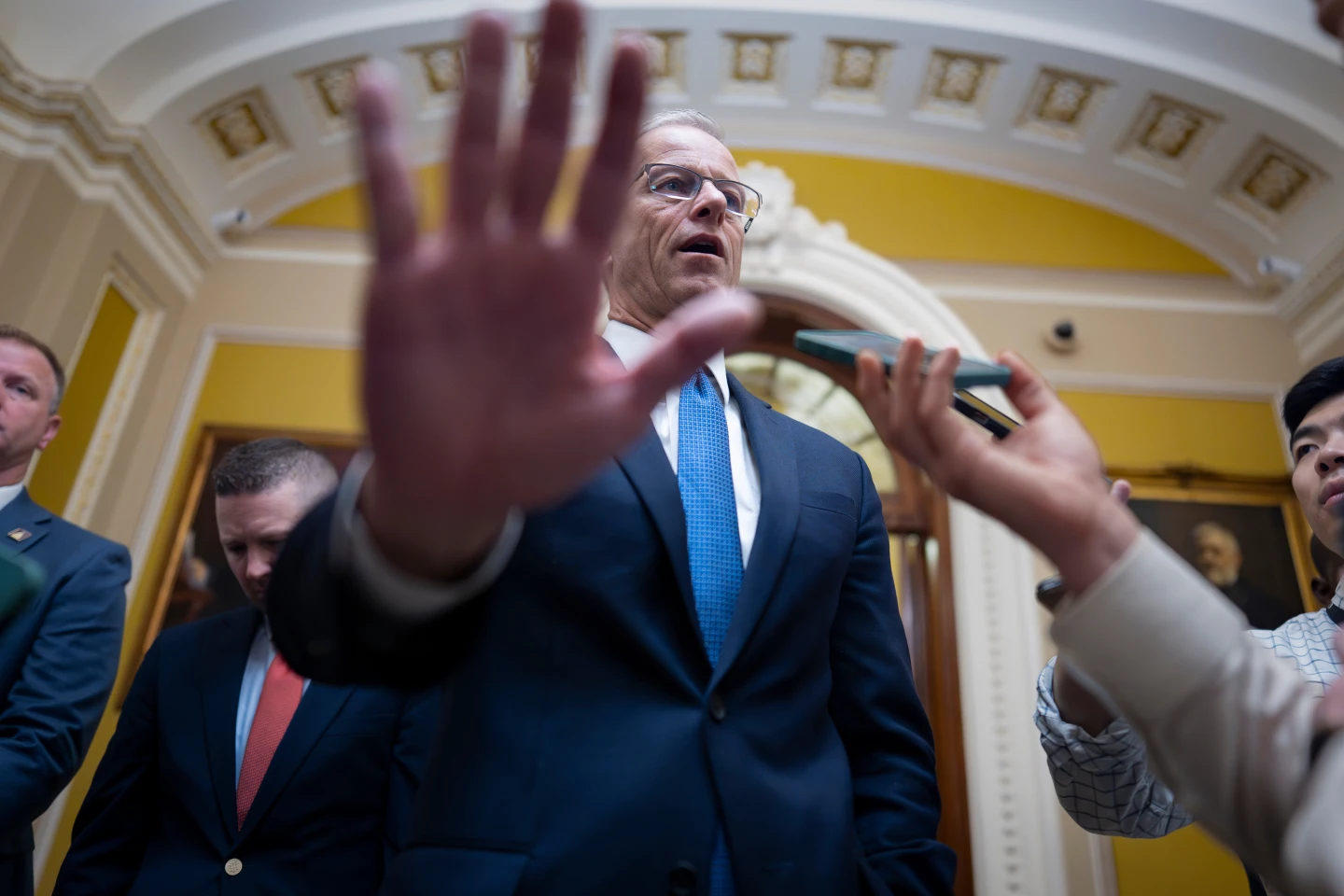
During the brief sessions, Senate Majority Leader John Thune, R-S.D., put aside the House plan to fund the entire department for 60 days. Then the House met briefly without taking up the bipartisan Senate plan that had been worked out with Democrats, though Thune is looking toward eventual passage.
“I don’t know the particulars around what the House will do with it,” Thune told reporters. “My assumption is, at some point, hopefully, they’ll move it.”
House Republicans were expected to hold a conference call later in the day to discuss the next steps.
Speaker Mike Johnson, R-La., and John Thune announced Wednesday that they would return to the Senate measure, which funds most of DHS with the exception of U.S. Immigration and Customs Enforcement and U.S. Border Patrol. Republicans will try later to fund those agencies through party-line spending legislation that could take months to finish.
“The thing that some people want to do, we can’t do,” said Thune. “And so you have to figure out what’s in the realm of the possible. And you have to just continue to define reality for people.”
Meanwhile, Senate Democratic leader Chuck Schumer of New York blamed Republicans for not acting more quickly. “Republican divisions derailed a bipartisan agreement, making American families pay the price for their dysfunction,” Schumer said.
The vast majority of DHS employees have reported to work during the shutdown, but many thousands have gone without pay. As more Transportation Security Administration agents called out from work, there was increasing frustration for air travelers confronted by long waits at some airport security lines. Those bottlenecks appeared to be clearing this week as agents began receiving backpay after Trump signed an executive order.