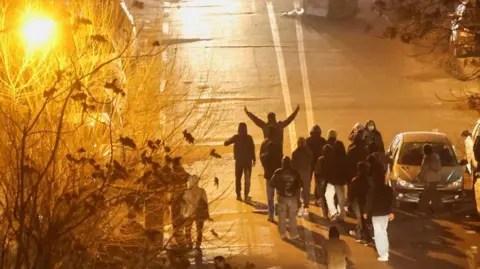
Iran's rulers are confronting their most serious challenge since their own 1979 revolution.
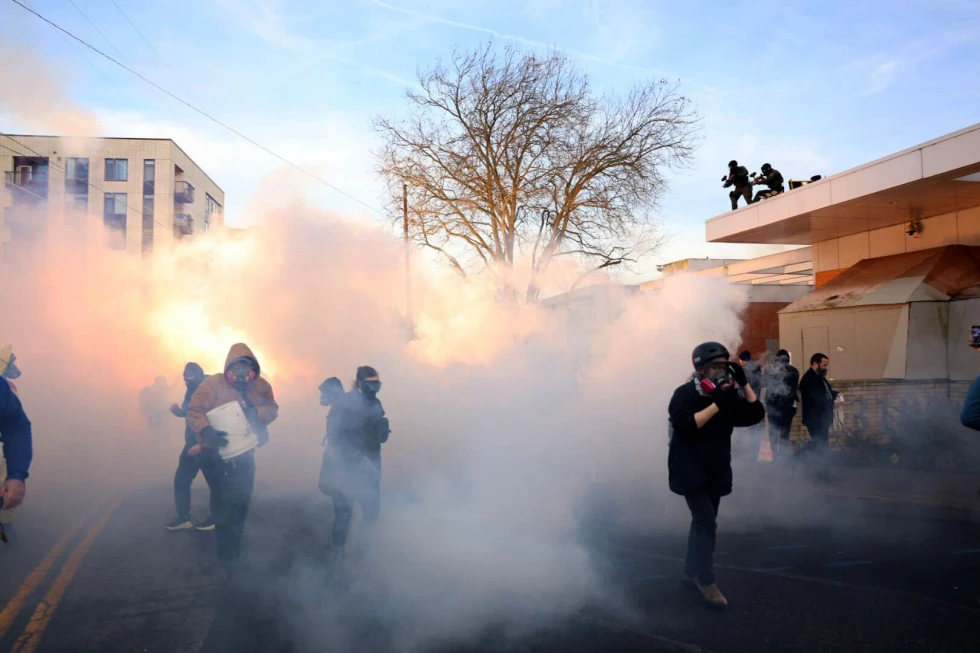
They're now countering on an unprecedented scale - a ferocious security crackdown and near total internet shutdown has been unleashed on a scale unseen in previous crises.
Some of the streets once engulfed by a roar of anger against the regime are now starting to go silent.
On Friday it was extremely crowded - the crowd was unbelievable - and there was a lot of shooting. Then Saturday night it became much, much quieter, a resident of Tehran told BBC Persian.
You would have to have a death wish to go out now, one Iranian journalist reflected.
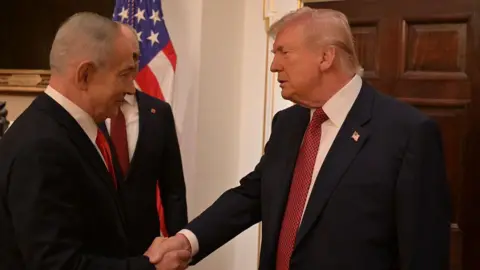
This time, an internal upheaval is also compounded by an external threat, with President Trump's repeated warnings of military action coming seven months after the US carried out strikes on key nuclear facilities during a 12-day war between Iran and Israel, which left the regime weakened.
But, to use an analogy often used by the American leader, that has also given Iran another card to play.
Trump now says Tehran has called to go back to the negotiating table.
But Iran doesn't have a good hand: President Trump says he may still have to take some kind of action before any meeting; talks won't take all the searing heat out of this unrest.
And Iran won't capitulate to what have been the US's maximalist demands, including zero nuclear enrichment, which would cross red lines which lie at the very heart of this theocracy's strategic doctrine.
Whatever the pressure of this moment, there's no sign Iran's leaders are changing course.
“Their inclination is to clamp down, to try to survive this moment, and then to figure out where they go from here,” says Vali Nasr from the Johns Hopkins School of Advanced International Studies, author of the book Iran's Grand Strategy.
This week may decide the momentum in this moment - whether Iran, and the wider region, is plunged into another bout of military attacks; whether brute force has completely put down these protests – as it has in the past.
Iran's Foreign Minister Abbas Araghchi told diplomats in Tehran today that the situation is now under total control.
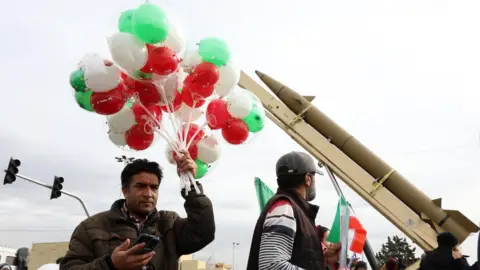
Outside, in the bright light of day, the streets of Tehran were filled with the crowds the government called on to come out and reclaim the streets from protesters.
Five days into a comprehensive communications blackout, shocking videos sneaked out into the world through Starlink satellite terminals show hospitals overwhelmed by casualties, grim images of makeshift mortuaries filled with long lines of black body bags.
Legal language has also hardened in this time - vandals will be charged with waging war against God and face the death penalty.
The government puts the main blame on foreign enemies - code name for Israel and the US. This time, their accusation is also fuelled by the clear extent of infiltration by Israel's Mossad security agency during their 12-day war last year.
One of the loudest Iranian voices calling on President Trump to intervene has been the exiled former crown prince Reza Pahlavi, but his call is controversial. Others, including Nobel laureate Narges Mohammadi, insist that change must come from within and remain peaceful. The outcome of this unrest could lead to significant changes or a solidification of the existing regime.