In brief
The IDF’s seizure of the fortress, north of the Litani River, is portrayed by Prime Minister Benjamin Netanyahu as a decisive shift in Israel’s campaign against Hezbollah. The move follows a series of evacuation orders in southern Lebanon and draws sharp criticism from Lebanon, the European Union, and key U.S. allies. Amid this backdrop, the fragile cease‑fire that had temporarily halted hostilities is deteriorating, with both sides accusing the other of violations.
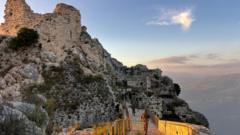
The Israeli military announced it had captured Beaufort Castle, a strategic fortress perched 14.5 km (9 mi) north of the Israeli‑Lebanese border, in southern Lebanon. The move—heralded by Prime Minister Benjamin Netanyahu as a decisive shift—comes as ground troops move deeper into the country beyond the Litani River, Israel’s historical line of demarcation.
Netanyahu, speaking from Jerusalem, framed the capture as a symbol of the IDF’s initiative across Syria, Gaza and Lebanon. He stressed the aim was to deepEN and expand our grip on places that were under Hezbollah’s control, and to prove that Israel no longer had a fear barrier against the Iranian‑backed group. He referenced the first Lebanon war of 1982 when Israeli ground forces first seized the castle, declaring that the flag would once again rise there in a new era of defence.
Following the seizure, the IDF issued another evacuation notice for residents living in the entire south of Lebanon below the Zahrani River—the second time in a few days that the warning has been issued. The Israeli defence spokesman said the threat came from “Hezbollah elements, facilities or means of combat” and that a significant number of soldiers were now involved in operations that were being expanded to other areas.
The move drew sharp rebuke from the Lebanese government, which decried Israel’s actions as collective punishment and a scorched‑earth policy. Lebanese Prime Minister Nawaf Salam accused Israel of a brutal march through the south, while Hezbollah blamed Israeli shelling for violating the temporary cease‑fire that had been in place since the start of the month. Both sides have also accused each other of breaches that have brought the cease‑fire to the brink of collapse.
On the international stage, France, Germany, and the United Kingdom all called for a halt to the escalation. French President Emmanuel Macron urged “the weapons to fall silent – all of them, and for good”. German Foreign Minister Johann Wadephul warned that any further advance would stimulate new waves of civilian displacement, while U.K. Foreign Secretary Yvette Cooper demanded that both Israel and Hezbollah curb hostilities. The European allies have pushed to convene a United Nations Security Council meeting to discuss the situation.
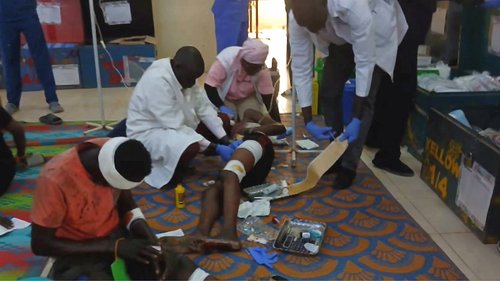
While Israel justified its actions by citing Hezbollah’s increased use of drones and missiles against Israeli troops and civilians, the Lebanese Health Ministry reported that 13 medical staff were injured in an airstrike near the Hiram hospital in Tyre, and a further soldier had been killed in a separate incident. Schools on the Israeli side of the border were temporarily closed for safety.
The historical significance of the fortress cannot be overstated: the Crusader‑era structure has dominated the coastline of the Litani valley for centuries and was again seized by Israeli troops 44 years ago during the 1982 Lebanon War. Its modern capture is therefore both a strategic advantage for Israel—protecting diasporic communities beyond the border—and a symbolic reclamation of a site long associated with Israeli military achievements.
The situation remains volatile. With Israel’s ground forces advancing deeper into southern Lebanon, the cease‑fire negotiations are in doubt. A fourth round of talks in Washington has been scheduled for this week, but as of now, the stalemate continues, with both sides accusing each other of violating agreements and pushing the possibility of a broader conflict.
Witness accounts describe the ruins of Beaufort’s keep coming alive in the presence of Israeli soldiers, as the IDF stands on a structure that had once been a bulwark against the Orthodox Christian and Ottoman armies. In the words of Defence Minister Israel Katz, control of the castle and its surrounding ridge is “an important step in protecting Israeli communities on the other side of the border”.
The capture of Beaufort Castle marks the most recent historic landmark seized by Israel in this renewed confrontation with Hezbollah, hinting at a further intensification of an already volatile situation that has drawn in regional powers and left many civilians displaced or in danger.