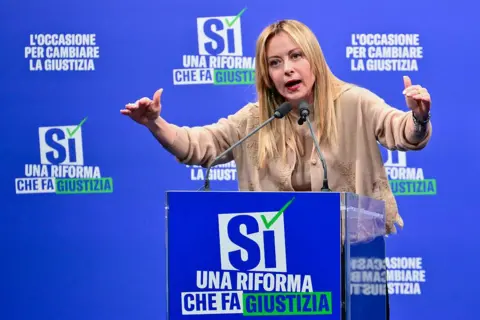
In her push for a yes vote in this weekend's constitutional referendum, Italy's Prime Minister Giorgia Meloni has been reaching for new audiences.
On Thursday, Meloni sat at the mic between popular rapper Fedez and personal trainer-turned-podcaster Mr. Marra to urge Italians to vote for a judicial system she promised would be more just for all.
Opposition parties have been busy too, styling the historic reform proposed by the right-wing government as a threat to democracy and turning it into a protest vote against Meloni's rule.
In power for three-and-a-half years, close to a record in a land of shaky coalitions, Meloni prides herself on bringing stability to Italy. But with the referendum increasingly personal, she could be facing her first significant defeat.
She wants to win. If she loses, there will be an impact and she understands that, political scientist Roberto D'Alimonte of Luiss University explains.
As the referendum approaches, Meloni has used diverse platforms to mobilize her supporters, including engaging younger voters through appearances on popular media shows.
The campaign centers on reforms that would separate the career paths of judges and prosecutors and create a new disciplinary court. While some see merit in these changes, many others perceive it as a consolidation of power by Meloni.
Efforts against the proposed reforms have been marked by union protests and accusations that the referendum serves more to bolster Meloni's political future than to genuinely improve the judiciary.
Many Italians struggle to grasp the nuances of the referendum, leading to fluctuating enthusiasm and participation rates. Recent polls suggest that low turnout could favor the opposition's no campaign.
As this weekend approaches, the stakes are high for Meloni—her leadership and the future direction of Italy's judiciary depend on the outcome of this referendum.
}