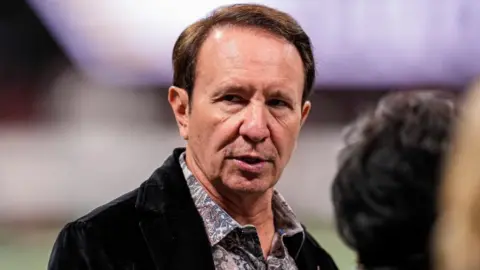
President Donald Trump’s special envoy to Greenland, Jeff Landry, has begun his first visit to the Arctic island aimed at building ties and making friends.
I’m here simply to build relationships, to look, to listen and to learn, Landry stated after arriving in Greenland's capital, Nuuk. He emphasized goodwill as his primary purpose.
However, the visit provokes strong reactions from the local population. Greenandic Prime Minister Jens-Frederik Nielsen asserted that the territory is not for sale, a sentiment echoed by many residents who have felt marginalized by previous U.S. overtures. This diplomatic friction arises after President Trump had previously suggested that the U.S. might acquire Greenland, which has left many Greenlanders skeptical of American intentions.
Accompanied by a small group, including an American doctor assessing Greenland's medical needs, Landry's trip seeks to engage in discussions at a business summit and mark the opening of a new U.S. consulate. Yet, the Health Minister Anna Wangenheim decried the doctor's presence as deeply problematic, reflecting ongoing local concerns about U.S. involvement.
Landry has been sent on this mission following Trump's controversial remarks about seizing Greenland, a claim the U.S. has since distanced itself from but which has left lingering distrust amongst the local populace. Despite being tasked to foster goodwill, Landry's visit lacks official invitation and arrives during sensitive negotiations between Denmark, the U.S., and Greenland.
Nielsen noted positive discussions at their meeting but stressed the importance of respecting Greenland's sovereignty, declaring they are not for sale. Other leaders within Greenland's government have voiced similar concerns over Landry’s visit, suggesting that his purpose might be more about pursuing U.S. interests rather than genuine diplomacy.
While he attempts to convey a message of friendship and attention from the U.S., many Greenlanders view the current situation with skepticism. Residents, including business leaders and ordinary citizens, have expressed distrust and concerns stemming from the U.S.'s aggressive previous statements. Examples spring from the recognition that, only months prior, Greenland felt threatened by U.S. aspirations.
As Landry endeavors to engage locals and promote positive relationships, the complexity of U.S.-Greenland relations remains pronounced, accentuated by the historical context of mistrust. Observers highlight that building relationships will require patience and a fundamental shift in U.S. policy to credibly reassure the Greenlandic people.